Esma OrbayPremier Commis
23 August 2026 Last updated: 23 August 2026

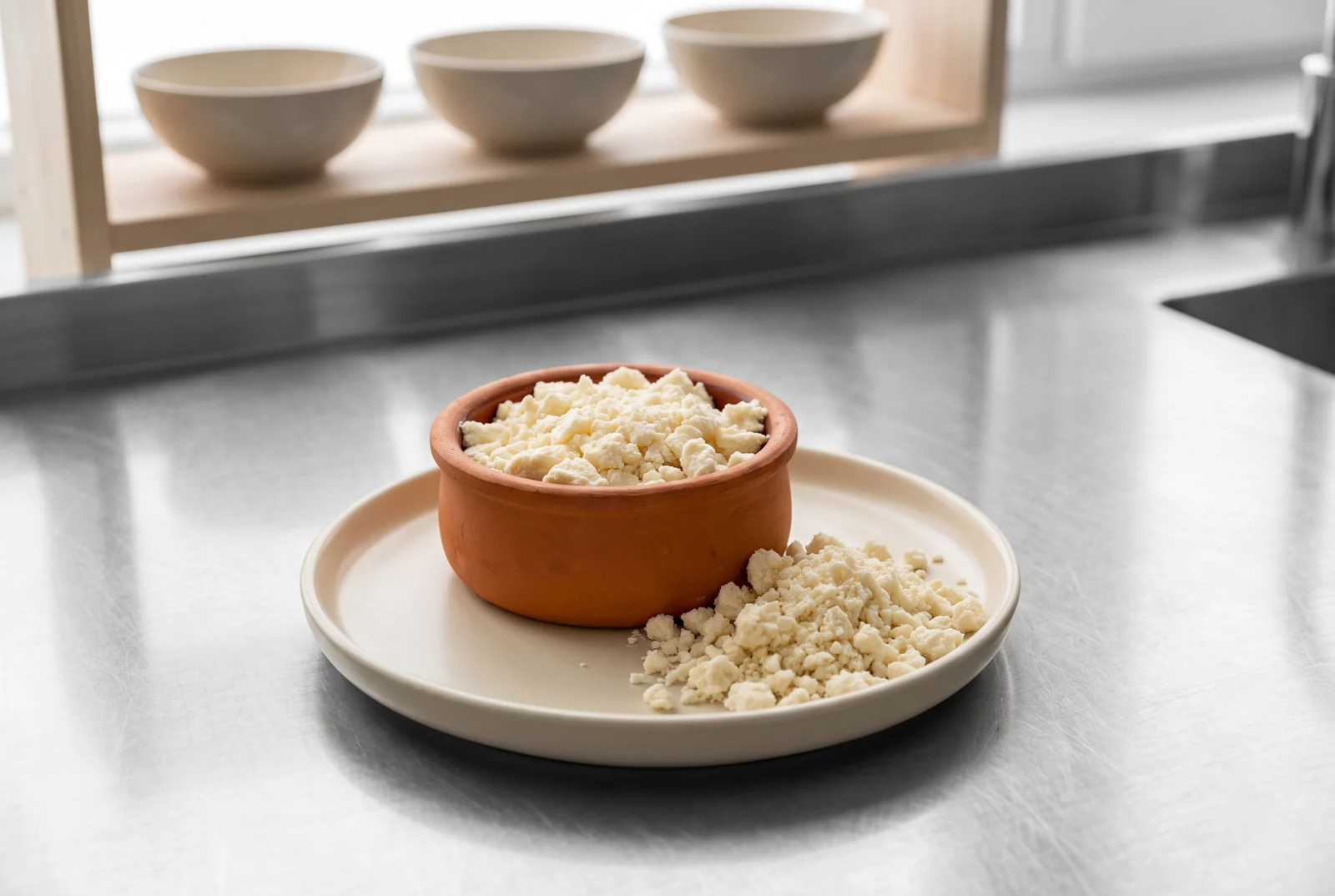
This Thracian cheese is made by crumbling fresh cheese, salting it, packing it into a clay pot, sealing the pot, and burying it to age for months. The steady temperature underground allows it to mature slowly and evenly. The result is a crumbly, pungent, salty cheese; it is scooped with a spoon rather than sliced.

Step by Step

How to make it?

1

Warm the milk and add the rennet

12 min

Warm the milk to 32°C / 90°F; when you dip a finger into it, it should feel neither hot nor cold. Dissolve the rennet in half of a 200 ml measure of lukewarm water and pour it over the milk. Stir a few times, cover the pot, and leave it undisturbed.

2

Cut and drain the curds

15 min

The curd is ready to cut when a knife inserted into it leaves a clean split that fills with clear yellow whey. Cut it into 2 cm squares and let it rest for 15 minutes. Transfer it to a cheesecloth-lined strainer and let the whey drain away.

3

Crumble and salt

12 min

Crumble the drained curds by hand into hazelnut-size pieces and mix them with the rock salt, rubbing it in. Do not reduce the salt; it is the only thing protecting the cheese during aging.

4

Pack into the clay pot

12 min

Rinse the clay pot with boiling water and dry it. Add the cheese by handfuls, pressing firmly with your fist each time so no air pockets remain. Any gaps can become a starting point for mold.

5

Seal the opening

8 min

Stretch a clean cloth over the opening of the pot, sprinkle a thin layer of salt on top, and put on the lid. Seal around the edges with melted beeswax or dough.

Reminder

If using raw milk, heat it to 65°C / 149°F for 30 minutes before adding the rennet, then cool it to 32°C / 90°F. Keep the sealed pot in a cool, dark place or buried underground for at least 3 months. If green or black mold appears on the surface, discard the cheese. Allergens: Contains milk and dairy products based on the ingredient list. Check packaged product labels for other allergens.

Nutritional Values · 1 serving

Values are estimates
108 kcalCalories
8 gProtein
1 gCarbohydrate
8 gFat
0 gFiber
1 gSugar
700 mgSodium
5 gSaturated Fat
Protein 30% Carbohydrate 4% Fat 67%
Share
Reviews

Comments (2)

2.0 3 reviews 0% recommend it 3 rated without leaving a comment
5 0
4 0
3 1
2 1
1 1
U
Umut Cangöz 2 weeks ago

Pıhtıyı çok ince ufalayınca peynir kumlu oldu, iri ufalamak daha iyi sonuç verdi.

H
Hakan Dalkıran 1 month ago

Çömleği önce kaynar suyla çalkalayıp kuruttum. Ağzını da bez ve tuzla kapatmak gerekiyormuş. Peyniri çömleğe bastırırken hava boşluğu bırakmamak gerekiyor, boşluk kalan yerlerde küf oluştu ve o kısmı atmak zorunda kaldım.

Similar Recipes

You'll like these too

Recipes tried by those who liked this one, fitting the same table.

Send Feedback