Ece AkaydınCommis de Cuisine
12 August 2026 Last updated: 12 August 2026

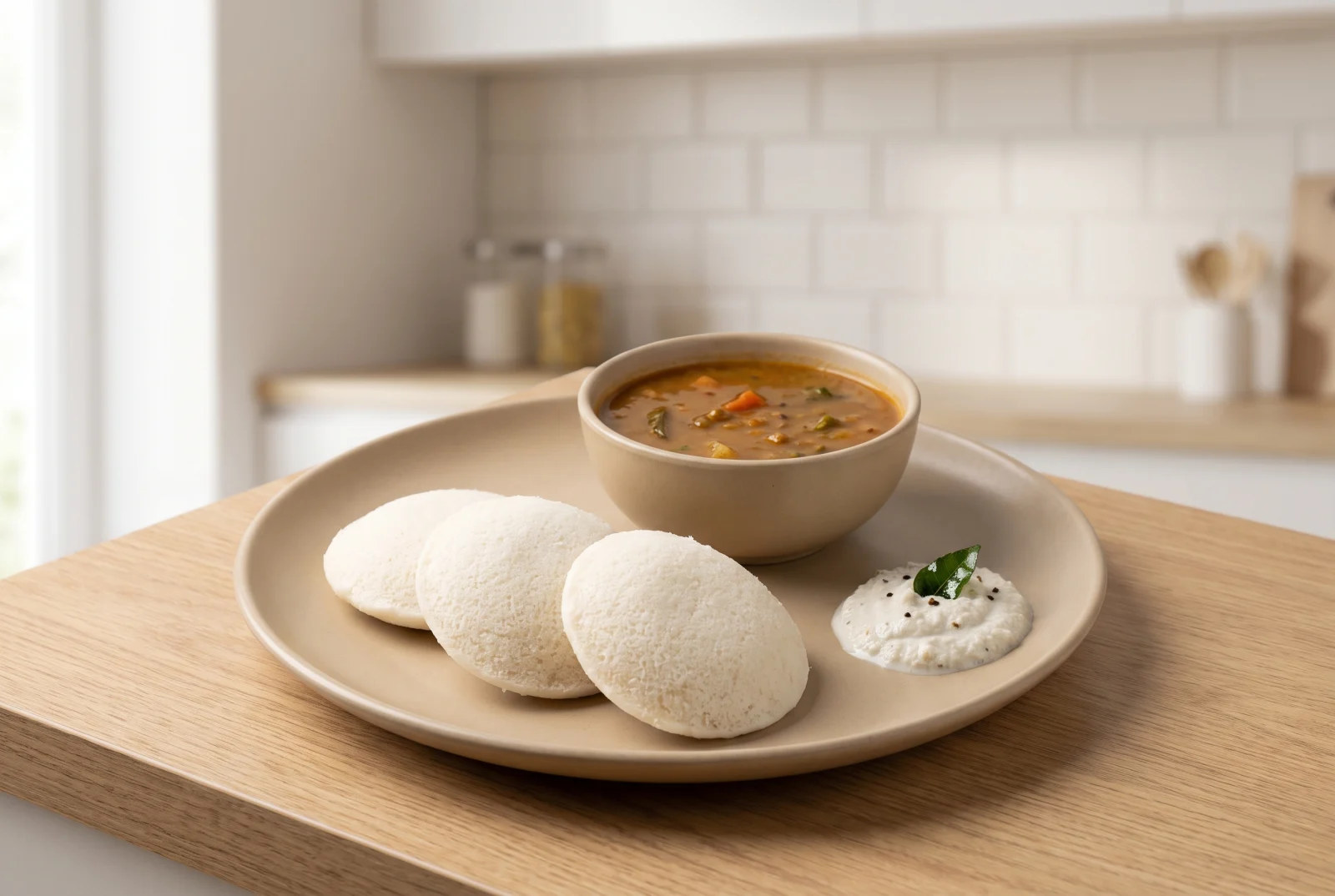
Idli is made by grinding rice and skinned urad dal separately, combining them, fermenting the batter overnight, and steaming it in molds. It contains no yeast or baking powder; natural bacteria on the surface of the urad dal help the batter rise. Idli is a South Indian breakfast food, served with sambar, and contains no added oil. Grinding the two grains separately is not a fussy detail: the urad dal traps air in a foam, while the rice gives the batter structure.

Step by Step

How to make it?

1

Rinse and soak the rice and dal

8 min

Rinse the rice 4–5 times, until the water runs clear, then cover it with water to a depth of three finger-widths. In a separate bowl, rinse and soak the urad dal and fenugreek seeds in the same way. Do not put them in the same bowl; they will be ground to different textures and for different lengths of time.

2

Grind the urad dal until foamy

12 min

Drain the soaked urad dal and grind it in a food processor, gradually adding a little of the soaking water. The right texture is smooth, white, and visibly fluffy; a spoonful dropped into water should float without sinking. Use water sparingly; batter that is too wet will not trap air.

3

Grind the rice until slightly grainy

8 min

Unlike the urad dal, grind the drained rice until it is not smooth but slightly sandy between your fingers. This graininess gives idli its structure; if you grind the rice until creamy, the result will be rubbery. Use only a little water.

4

Combine and salt the batters

5 min

Combine the two batters in a large bowl and add the salt. Mix with your clean hand, not a spoon, using broad clockwise movements for 2 minutes; the warmth of your hand and the natural bacteria on it help start fermentation. Fill the bowl only halfway to leave room for the batter to rise.

5

Fill the molds

8 min

Grease each cavity in the idli molds with a thin layer of oil. Without stirring the fermented batter or knocking out its air, spoon it into the cavities until they are three-quarters full. Stirring will release the gas that built up overnight and the idli will come out flat.

6

Steam the idli

12 min

Bring two finger-widths of water to a boil in a pot. Set the idli mold inside, cover, and steam over high heat. They are ready when a toothpick inserted in the center comes out completely clean; if batter sticks to it, steam for 3 more minutes. Do not open the lid for the first 8 minutes.

7

Rest and unmold

5 min

Remove the molds from the heat and let them stand for 5 minutes; the idli may split in the middle if you try to remove them while hot. Run the edge of a moistened spoon around each one and gently lift it out. Serve hot with sambar and coconut chutney.

Reminder

Soak the rice and dal for 6 hours, then ferment the combined batter for 8–12 hours in a place around 25°C / 77°F. Do not pour it into the molds until its volume has nearly doubled and bubbles have formed on the surface; batter that has not fermented will make hard idli.

Nutritional Values · 1 serving

Values are estimates
94 kcalCalories
3 gProtein
19 gCarbohydrate
1 gFat
1 gFiber
0 gSugar
197 mgSodium
0 gSaturated Fat
Protein 12% Carbohydrate 78% Fat 9%
Share
Reviews

Comments (1)

3.8 8 reviews 75% recommend it 8 rated without leaving a comment
5 4
4 2
3 0
2 0
1 2
A
Aigul Nurlanova 1 month ago

Urad dalı köpürene kadar çekmek şart, makinenin ısınmaması için buzlu su kullandım. Fermantasyon bizim mutfakta on saat sürdü. Kalıpları yağlamayı da unutmayın, ilk turda yağsız kalıptan idli çıkarmaya çalışırken hepsi parçalandı.

E
Ece Recipe Owner 1 month ago

Buzlu su iyi bir çözüm, makinenin ısısı fermantasyonu bozuyor. Mutfak serinse hamuru fırının içinde lamba açık bırakarak da bekletebilirsiniz.

Similar Recipes

You'll like these too

Recipes tried by those who liked this one, fitting the same table.

Send Feedback