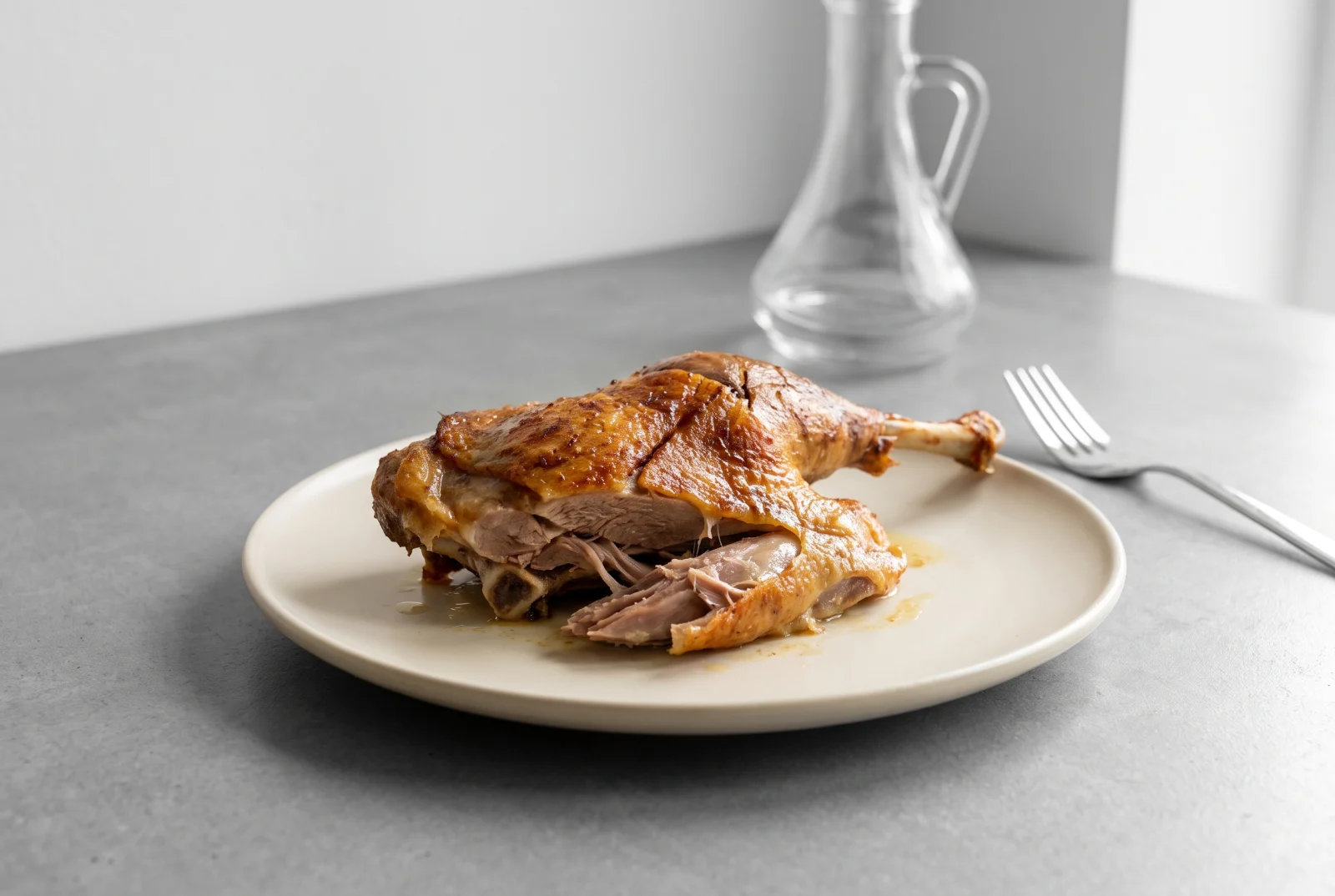
In Kars, geese are traditionally butchered in autumn, salted, dried in a cool place, and stored through the winter. The salt must therefore be drawn out before cooking. Goose is a fatty bird; as it roasts slowly at a low temperature, it releases its own fat, which is absorbed by the bulgur pilaf underneath.
Kars Kaz Tandırı (Kars-Style Roast Goose) | Salt-Cured Goose Baked in the Oven
In Kars, geese are traditionally butchered in autumn, salted, dried in a cool place, and stored through the winter. The salt must therefore be drawn out before cooking. Goose is a fatty bird; as it roasts slowly at a low temperature, it releases its own fat, which is absorbed by the bulgur pilaf underneath. dadagastro.com
6 servings 30 min + 180 min Hard 160°C oven
Step by Step
How to make it?
1
Cut up the goose
15 min
Drain the soaked goose and pat it dry with paper towels. Cut it into six pieces: legs, breast, and back. A whole goose may remain raw inside and dry outside. Score the skin in several places with the tip of a knife so the fat can render.
2
Arrange in the roasting pan
10 min
Arrange the pieces skin-side up in a deep roasting pan, sprinkle with black pepper, and pour 500 ml of water around the edges. Cover the pan tightly with two layers of foil.
3
Roast covered
120 min
Roast in an oven preheated to 160°C / 320°F for two hours. The low temperature is intentional: at higher heat, the skin can burn while the meat remains raw. At 160°C / 320°F, the fat renders slowly and the meat becomes tender enough to pull apart.
4
Make the pilaf
25 min
Ladle the liquid from the roasting pan through a strainer and reserve some of the fat from the surface. In a separate pot, melt the butter and sauté the onion. Add the bulgur and stir for 3 minutes. Add 600 ml of the strained goose cooking liquid and the salt, then cook over low heat for 18 minutes.
5
Brown the goose and assemble
25 min
Remove the foil and raise the oven temperature to 200°C / 390°F. Roast the goose pieces for 20 minutes, until the skin is deep brown and crisp. The goose is safely cooked when a thermometer inserted into the thickest part of the meat reads 74°C / 165°F and no pink remains near the bone. Spread the pilaf on a serving platter and arrange the goose pieces on top.
Reminder
Before cooking, soak the salt-cured goose in cold water for at least 12 hours, changing the water three times. If you skip this step, the meat will remain too salty to eat, and the pilaf will be spoiled as well.
Nutritional Values · 1 serving
Values are estimates
513 kcalCalories
34 gProtein
38 gCarbohydrate
25 gFat
5 gFiber
2 gSugar
1100 mgSodium
8 gSaturated Fat
Protein 27% Carbohydrate 30% Fat 44%
Share
Reviews
Comments (1)
3.97 reviews 71% recommend it7 rated without leaving a comment
5 4
4 1
3 0
2 1
1 1
Log in to comment
You need to sign in to your DadaGastro account to rate this recipe, share your experience, and join the comments. Reading comments is free.
Tuzlu kazı pişirmeden önce birkaç saat suda beklettim, yoksa hem et hem bulgur pilavı fazla tuzlu oluyor. Bulgur pilavını kazın kendi yağıyla yapmak gerekiyor, ayrı tereyağıyla yaptığımda pilav kazın yanında tatsız kaldı.
Similar Recipes
You'll like these too
Recipes tried by those who liked this one, fitting the same table.
Suggestions, complaints or questions — we read them all.
We received your feedback
Your message has been saved. Our team will read it; if you left an email address, we will reply there when needed.
Necessary cookies always run: session and security, your preferences (e.g. your location choice) and first-party measurement that counts how many times content is viewed. To understand how you use the site, we run Google Analytics cookies only if you accept them; if you choose “Reject”, they are not loaded. We do not use advertising or cross-site tracking cookies. Cookie Policy (in Turkish) · KVKK Privacy Notice (in Turkish)
Log in for this action
You need to log in to your DadaGastro account to save, comment and follow.