Emel AksuCuisinier Confirmé
09 August 2026 Last updated: 09 August 2026

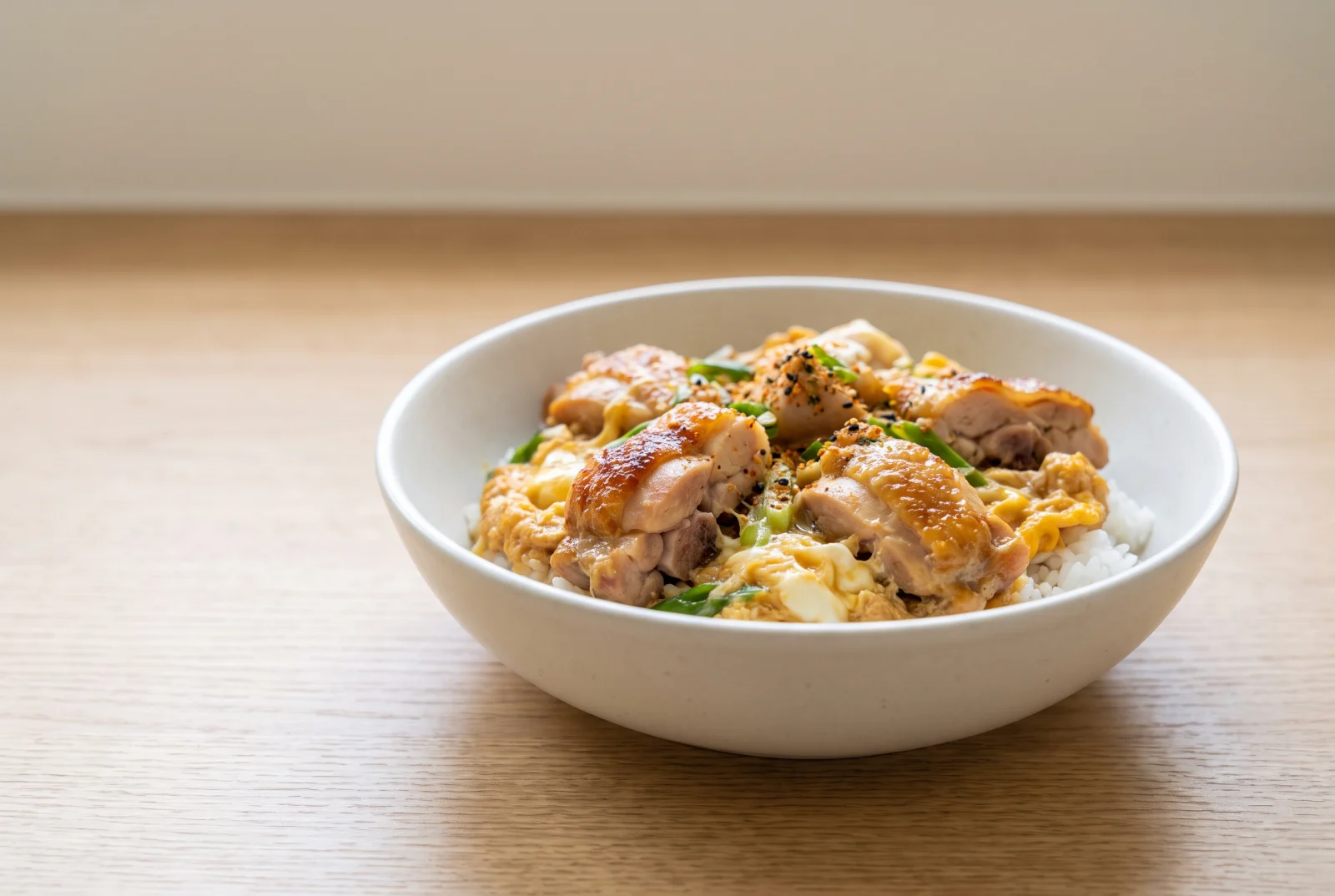
Oyakodon is made by simmering chicken and onion in a lightly sweet dashi broth, pouring beaten egg over them, and serving everything over hot rice. The egg is intentionally left partially uncooked: the steam from the rice in the bowl finishes setting it after the pan is taken off the heat. In Japan, it is made in small pans for individual servings because working in a small batch is the only way to take the egg off the heat at just the right moment.

Step by Step

How to make it?

1

Cook the rice

20 min

Rinse the rice in a large bowl 4–5 times, until the water runs clear, then drain. Put it in a pot with the measured water and cover. Cook over medium heat until it boils, then reduce the heat to very low and cook for 12 minutes. Do not open the lid while it cooks; the trapped steam cooks the inside of each grain, not just the surface.

2

Prepare the chicken and onion

8 min

Cut the chicken thighs into 3 cm pieces, keeping them the same size so they cook at the same time. Slice the onion from root to tip into 5 mm fan-shaped slices; cutting it into rings will make it fall apart. In a separate bowl, mix the eggs with just three or four strokes, until the yolks and whites are not fully blended.

3

Bring the sauce to a boil and soften the onion

5 min

Put the dashi, soy sauce, granulated sugar, and apple juice in a wide, shallow pan and bring to a boil. Spread the onion slices in a single layer and cook over medium heat until translucent and softened around the edges. The apple juice and granulated sugar provide the sweetness here; no other sweetener is needed.

4

Cook the chicken

8 min

Arrange the chicken pieces between the onion slices without overlapping them, then cover the pan. Cook over medium heat, turning the pieces once; the outsides will turn white and the sauce will begin to thicken. Check the thickest piece in the center: a meat thermometer should read 74°C / 165°F, with no pink flesh or cloudy juices.

5

Pour in the egg in two stages

3 min

Pour two-thirds of the beaten egg in a circular motion over the entire pan. Cover and wait 30 seconds. Drizzle the remaining third over the top, wait 20 more seconds, and remove the pan from the heat. The surface should still look glossy and runny; egg that cooks completely in the pan will turn rubbery in the bowl.

6

Transfer to the bowls

2 min

Divide the hot rice between two deep bowls and gently level the tops with a spoon. Use a spatula to slide the pan mixture over the rice without disturbing its layers, then pour the remaining sauce from the pan over it. Sprinkle with chopped green onions and shichimi togarashi, and serve immediately.

Reminder

After taking the rice off the heat, let it rest, covered, for 10 minutes; otherwise, the grains will stick together in the bowl and will not absorb the sauce.

Nutritional Values · 1 serving

Values are estimates
825 kcalCalories
52 gProtein
112 gCarbohydrate
17 gFat
2 gFiber
11 gSugar
870 mgSodium
5 gSaturated Fat
Protein 26% Carbohydrate 55% Fat 19%
Share
Reviews

Comments (4)

4.0 3 reviews 67% recommend it 3 rated without leaving a comment
5 1
4 1
3 1
2 0
1 0
F
Ferhat Kavaklı 4 weeks ago

Dashi'yi kombu ve katsuobushi ile çektim, hazır toz dashi ile arasında gerçekten fark var. Kombuyu kaynatmamak gerekiyor, bir kere kaynattım ve su yapışkan bir tat aldı. Katsuobushi'yi de suya attıktan sonra ocağı kapatıp demlenmeye bıraktım.

I
Ilgın Kervancı 1 month ago

Yumurtayı iki kerede dökme adımı işin can alıcı yeri, tek seferde dökünce omlet oluyor.

Ş
Şule Yorulmaz 1 month ago

But yerine göğüs kullandım, kuru kaldı.

E
Emel Recipe Owner 1 month ago

But eti yağı sayesinde sosun içinde kurumuyor. Göğüs kullanacaksanız sosu kaynattıktan sonra ocağı kapatıp tavuğu iki dakika dinlendirin.

R
Rana Cangöz 1 month ago

Elma suyu tatlılığı yeterince verdi, ayrıca şeker eklemedim.

Similar Recipes

You'll like these too

Recipes tried by those who liked this one, fitting the same table.

Send Feedback