Mix the dry ingredients
8 minSift the flour and baking powder together, then add the rolled oats, sugar, and salt and mix by hand. Do not sift the oats; the coarse pieces are part of the intended texture. Preheat the oven to 180°C / 355°F.
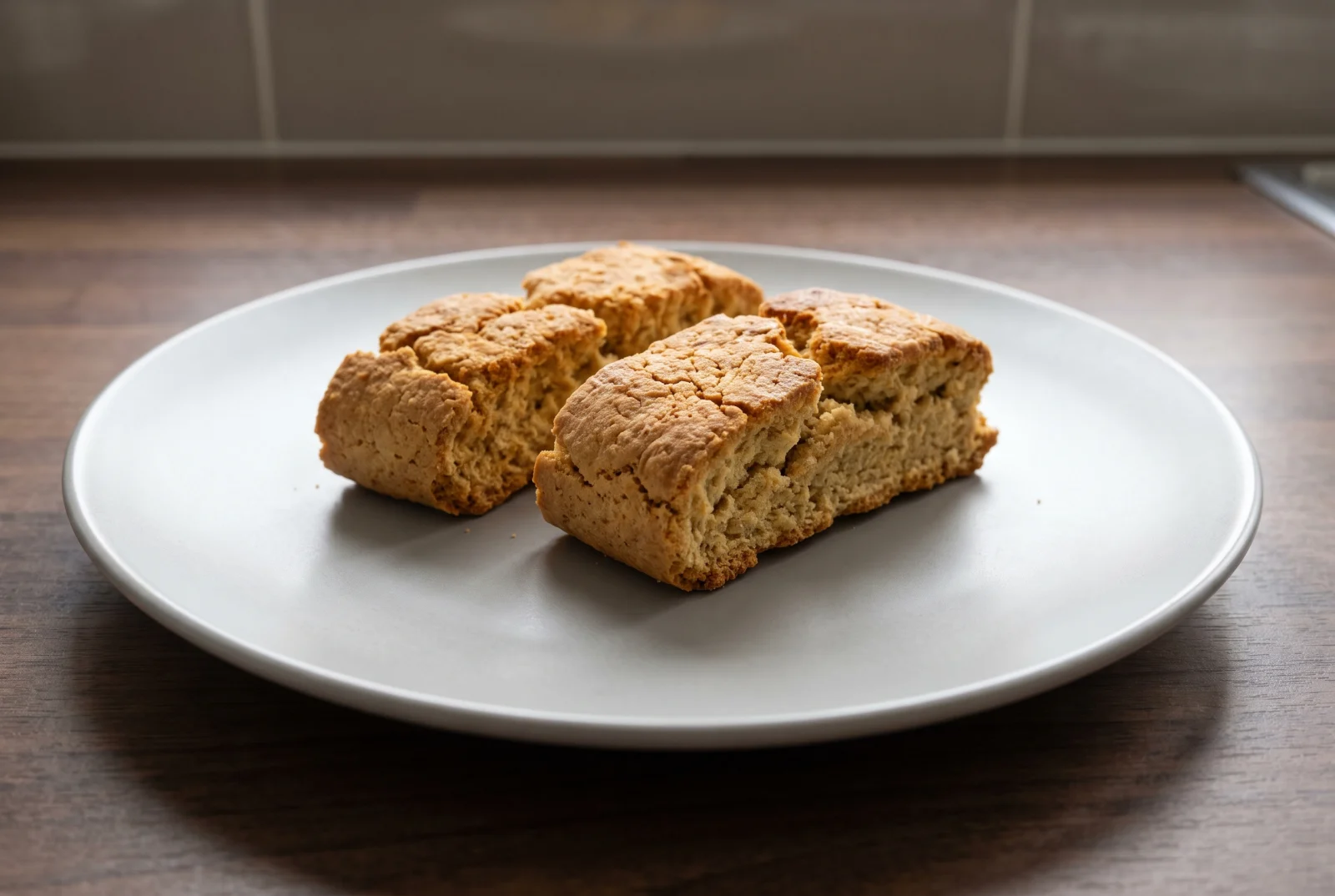
Beskuit are twice-baked rusks eaten with morning coffee in South African homes. The buttermilk dough is first baked as joined rolls at a regular oven temperature, then, once lukewarm, pulled apart by hand and dried for hours at very low heat. The second stage is drying, not baking: the goal is to remove all the moisture, not to add color. Unlike rusks made from stale bread, beskuit start as their own dough, so the inside stays airy and light.
Sift the flour and baking powder together, then add the rolled oats, sugar, and salt and mix by hand. Do not sift the oats; the coarse pieces are part of the intended texture. Preheat the oven to 180°C / 355°F.
Pour the melted, cooled butter into the dry mixture and distribute it with a spoon. Combine the beaten eggs with the buttermilk and add gradually. Do not knead the dough; bring it together only until no flour remains. Overworking makes the rusks hard as a rock, while the desired interior is airy.
Pinch off walnut-sized pieces of dough, roll them between your palms, and arrange them in rows in a deep parchment-lined baking pan so they touch. This is essential: they join as they bake, then pull apart by hand with rough edges that help the drying heat reach the center.
Bake at 180°C / 355°F for 45 minutes. The first stage is done when the top is golden and a skewer inserted in the center comes out clean. Remove the pan and let it cool until completely lukewarm; the dough will fall apart if you try to pull it apart while hot.
Remove the lukewarm slab from the pan and pull it apart by hand along the seams; do not use a knife, since the smooth cut surfaces dry more slowly. Arrange the pieces in a single layer on a wire rack or oven rack, leaving a finger-width of space between them.
Lower the oven to 100°C / 210°F—this is a drying temperature, not a baking temperature; higher heat will brown the rusks before they dry—and prop the door open with a wooden spoon. Dry the pieces for 5 hours. The rusks are ready when one broken in half has the same dry texture all the way through. Once completely cool, store them in an airtight container.
During the drying stage, prop the oven door open with a wooden spoon; otherwise, moisture trapped in the oven will keep the rusks soft and the hours of drying will be wasted. If a rusk is still moist or flexible inside when broken in half, it needs more drying.
No one has commented on this recipe yet. Write the first comment.
Recipes tried by those who liked this one, fitting the same table.
Suggestions, complaints or questions — we read them all.
Your message has been saved. Our team will read it; if you left an email address, we will reply there when needed.