Barlas ArslanoğluAide de Cuisine
04 July 2026 Last updated: 12 September 2026

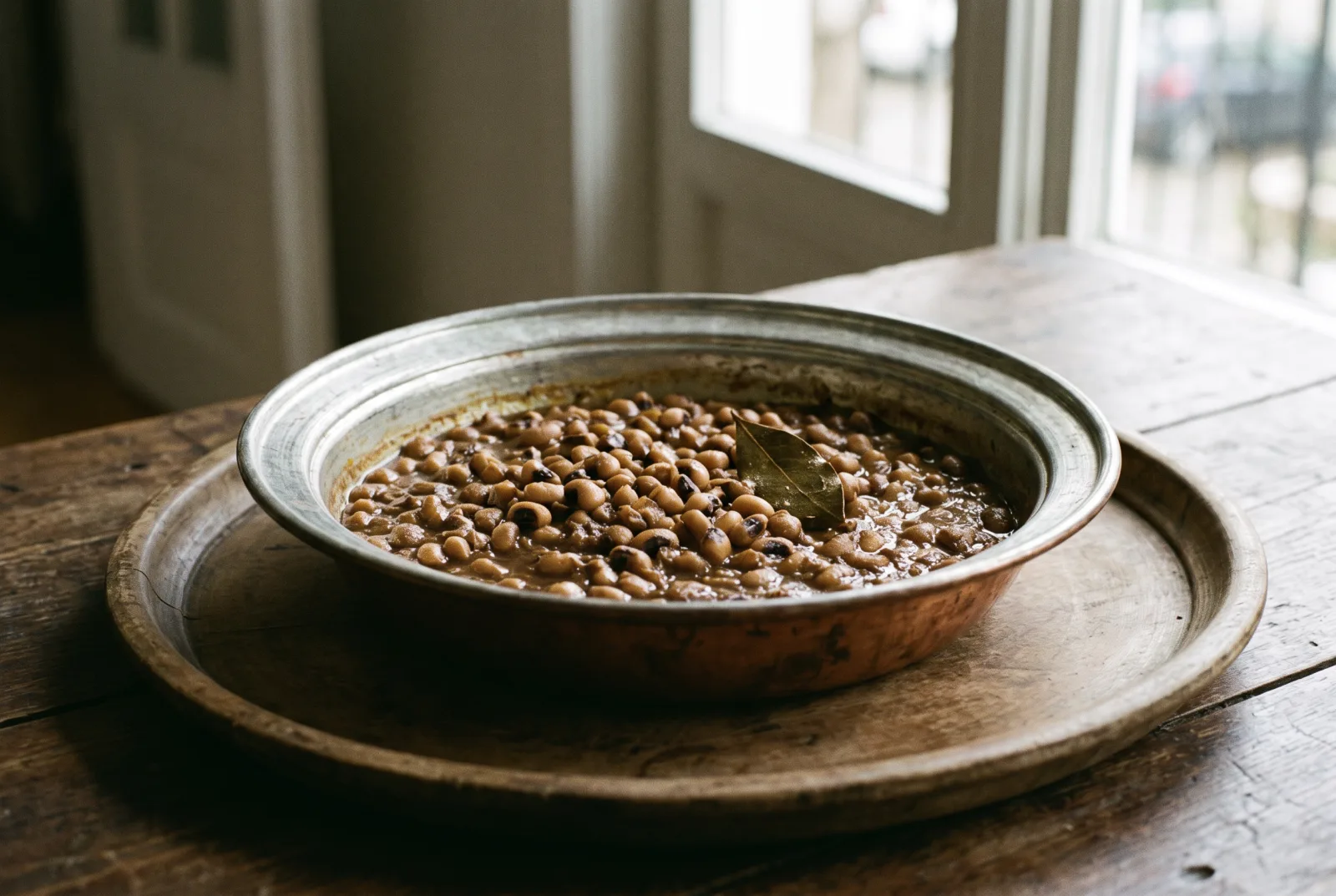
Black-eyed peas are a low-acid food and can be safely home-canned only in a pressure canner. No tested method recommends a boiling-water bath for canning non-pickled vegetables: boiling water does not exceed 100°C / 212°F and does not destroy Clostridium botulinum spores. This recipe describes soaking the peas, boiling them in fresh water, hot-packing them into jars, and processing them at the time and pressure listed on the USDA dried-beans chart for the jar size. A pressure canner is not a pressure cooker: it has a calibrated gauge and enough capacity to keep jars upright, and the warm-up and cool-down times are part of the tested process; a home pressure cooker does not meet these requirements. The old water-bath method has been removed because it is unsafe.

Step by Step

How to make it?

1

Prepare the jars and canner

10 min

This recipe fills 3 500 ml jars. A 1 L jar may also be used; do not use a larger jar because no processing time has been tested for it. Wash the jars in hot, soapy water and rinse them, then keep them in hot water until filling. Separate boiling sterilization is not needed because the pressure process also heats the jars. Prepare the lids according to the manufacturer’s instructions; do not reuse lids. Place the rack in the pressure canner, add 5–8 cm of hot water, and keep it warm over low heat.

2

Sort the peas

5 min

Choose mature, dry peas; discard any that are discolored, split, or shriveled. The USDA average is 164 g per 500 ml jar; 500 g of dried black-eyed peas fills three jars.

3

Boil in fresh water

30 min

Discard the soaking water, rinse the peas, and add them to a pot with 2 liters of fresh water. Add the bay leaf. Bring to a boil and boil for 30 minutes; the peas will not be fully tender yet, as cooking is completed in the pressure canner. Remove the bay leaf before filling the jars; it is not part of the tested method.

4

Fill the jars

10 min

Hot-pack the black-eyed peas with their cooking liquid, leaving 2.5 cm of headspace. If desired, add half a 4 ml measure of salt to each 500 ml jar; salt is for flavor only and does not help preserve the food. Remove air bubbles with a plastic spatula, restore the headspace to 2.5 cm, wipe the rim with a clean, damp cloth, and close the lid.

5

Close the canner and vent it

Place the jars upright on the rack, without letting them touch. Lock the canner lid and heat it with the vent pipe open. Once steam flows steadily from the vent, let it vent for 10 minutes; trapped air keeps the temperature low even if the gauge shows pressure. Then attach the weight or close the valve and let the pressure rise.

6

Process under pressure

75 min

Choose the pressure according to altitude. For a weighted-gauge canner: 10 psi at 0–305 m and 15 psi above 305 m. For a dial-gauge canner: 11 psi at 0–610 m, 12 psi at 610–1,219 m, 13 psi at 1,219–1,829 m, and 14 psi at 1,829–2,438 m. Istanbul and Izmir are in the first range (10 psi weighted gauge, 11 psi dial gauge); Ankara is at 938 m (15 psi weighted gauge, 12 psi dial gauge); central Erzurum is above 1,829 m (15 psi weighted gauge, 14 psi dial gauge). Have the dial gauge tested for accuracy before use each year. Start timing as soon as the gauge reaches the pressure for your altitude: process dried black-eyed peas for 75 minutes in 500 ml jars or 90 minutes in 1 L jars. Adjust the heat to maintain steady pressure. If the pressure drops below the target at any point, bring the canner back to pressure and restart the processing time from the beginning.

7

Let the pressure drop naturally

When the time is up, turn off the heat and leave the canner in place until the pressure drops to zero on its own. Do not cool the canner with cold water or open the valve early, because cooling is part of the tested process and a sudden pressure drop can siphon liquid from the jars. Once the gauge reads zero, remove the weight or open the valve, wait 10 minutes, then open the lid away from you so steam does not hit your face.

8

Cool the jars and check the seals

5 min

Use a jar lifter to remove the jars upright and place them on a towel or wire rack with 2.5 cm of space between them. Leave them untouched to cool for 12–24 hours; do not tighten the lids. Once cool, press the center of each lid with a finger. It is sealed if the center stays indented and does not move when pressed. If it springs up or clicks up and down, it is not sealed. Refrigerate any unsealed jar and use it soon, as you would cooked food. Label the sealed jars with the product name and date.

9

Store and inspect before opening

Store sealed jars in a cool, dry place away from direct light. Before opening, inspect the lid. The food is spoiled if the lid is bulging, the jar is leaking, liquid spurts or foams when opened, or the contents are moldy or smell bad. Never taste a suspect jar. If it is unopened, place it in a heavy bag, tie it tightly, and discard it. Botulinum toxin does not always show visible signs, so following the processing time and pressure exactly is the only guarantee.

Reminder

Soak the peas in plenty of water in a cool place for 12–18 hours overnight, or quick-soak them: cover with boiling water, boil for 2 minutes, turn off the heat, and let stand for 1 hour. Soaking time is not included in the step times. The canner warm-up, 10-minute venting, time to reach pressure, and natural pressure release are not included in the step times and add considerably to the total time; after processing, leave the jars untouched to cool for 12–24 hours. If the pressure drops, restart the processing time from the beginning; never speed up cooling. Method and times: USDA, Complete Guide to Home Canning (Agriculture Information Bulletin No. 539, revised 1994); table: NCHFP / University of Georgia, Pressure Canning Summary Sheet, 2003.

Nutritional Values · 1 serving

Values are estimates
288 kcalCalories
19.6 gProtein
50 gCarbohydrate
1.1 gFat
8.8 gFiber
5.8 gSugar
595 mgSodium
0.3 gSaturated Fat
Protein 27% Carbohydrate 69% Fat 3%
#canned black-eyed peas #winter preserves #Homemade #additive-free
Share
Reviews

Comments (0)

0.0 0 reviews 0% recommend it
5 0
4 0
3 0
2 0
1 0

No one has commented on this recipe yet. Write the first comment.

Similar Recipes

You'll like these too

Recipes tried by those who liked this one, fitting the same table.

Send Feedback