Mert DoğanCommis de Cuisine
12 August 2026 Last updated: 12 August 2026

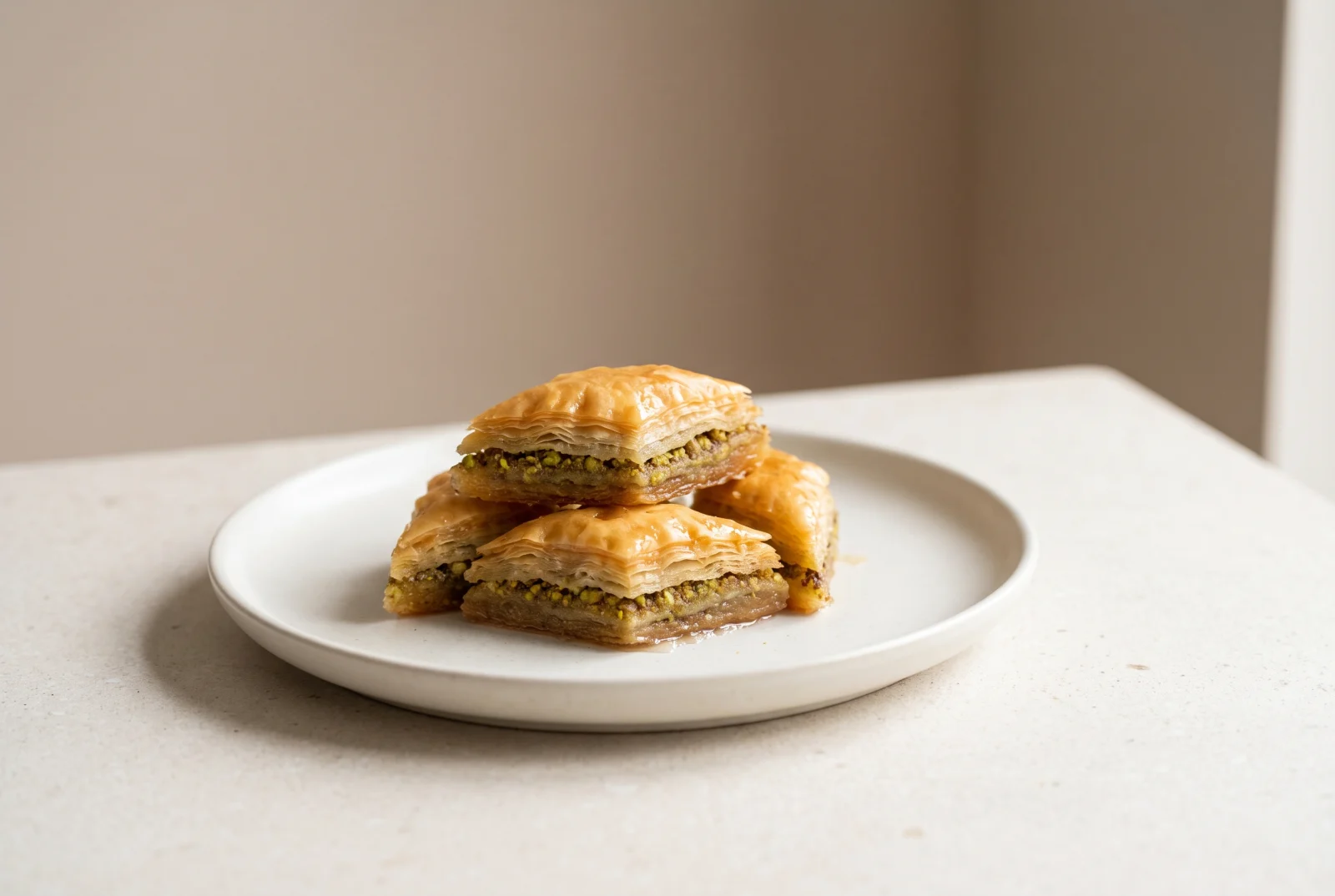
Dry baklava is a Gaziantep-style baklava baked with a measured amount of syrup and enough moisture driven off to keep it for days. It differs from classic baklava in two ways: it uses about one-third less syrup, and the tray bakes longer at a lower temperature. This is the baklava people take on trips or give as a gift; its defining quality is crispness rather than syrupy softness.

Step by Step

How to make it?

1

Reduce the syrup until thick

15 min

Bring the sugar and water to a boil and simmer over low heat for 12 minutes. Add the lemon juice just before removing it from the heat. This syrup should be less watery than the syrup for classic baklava: a drop falling from a spoon should form a thread that breaks, then leave a thin coating on the back of the spoon. Let the syrup cool.

2

Prepare the pistachios and butter

5 min

Coarsely chop the pistachios with a knife. Melt the butter, let it stand for 3 minutes, and skim off the clear portion. Dry baklava uses a generous amount of fat; the fat takes the place of water and keeps moisture out.

3

Layer the sheets

30 min

Lay half the yufka sheets in a greased pan, brushing plenty of butter between each sheet. Spread the pistachios in an even layer and stack the remaining sheets on top. This recipe calls for generous butter between the sheets; a dry sheet will harden in the oven instead of turning crisp.

4

Cut into small squares

10 min

Use a sharp knife to cut small squares, bringing the blade all the way down to the bottom of the pan each time. Make the pieces smaller than classic baklava; smaller pieces have more surface area, so moisture escapes more easily. Pour the remaining butter into the cuts.

5

Bake low and slow

55 min

Bake in an oven preheated to 170°C / 340°F for 55 minutes. Use 170°C / 340°F instead of the usual 180°C / 355°F because the goal is to slowly drive moisture from between the layers, not to brown the surface quickly. Lift a piece and check its underside: it should be golden and completely dry, with no pale damp spots.

6

Add the syrup sparingly

5 min

Pour the cooled syrup over the tray as soon as it comes out of the oven, distributing it with a ladle, but do not use all of the syrup. Stop when the sizzling begins to slow, and tilt the tray to check the bottom. If syrup pools there, you have added too much. Let the tray rest uncovered for at least 2 hours.

Reminder

After adding the syrup, do not cover the tray or refrigerate it. Dry baklava keeps well because moisture evaporates; in a sealed container, it softens within two days.

Nutritional Values · 1 serving

Values are estimates
266 kcalCalories
4 gProtein
31 gCarbohydrate
14 gFat
2 gFiber
15 gSugar
60 mgSodium
6 gSaturated Fat
Protein 6% Carbohydrate 47% Fat 47%
Share
Reviews

Comments (4)

0.0 0 reviews 0% recommend it
5 0
4 0
3 0
2 0
1 0
D
Doruk Efeoğlu 3 weeks ago

İki hafta sonra bile çıtırlığını korudu, bayram için önceden yapılabiliyor.

J
Jale Ulusoy 1 month ago

Düşük ısıda uzun pişirme adımı bu baklavanın tamamı. Normal baklava gibi yüksek ısıda pişirenler kuru baklava elde edemiyor. Yufkaları dizerken her katı ayrı ayrı yağlamak gerekiyor, iki katta bir yağladığımda kuru kalan yerler fırında kavrulup kırıldı.

G
Gülnur Cebeci 1 month ago

Şerbeti koyu kurma uyarısına uymadım, sulu şerbetle yaptım ve yufkalar birbirine yapıştı.

N
Nadir Barutçu 1 month ago

Şerbeti ölçülü dökmek zor geldi, azdır diye fazla döktüm ve dayanıklılık gitti.

Similar Recipes

You'll like these too

Recipes tried by those who liked this one, fitting the same table.

Send Feedback