İrem PektemekCommis de Cuisine
30 August 2026 Last updated: 30 August 2026

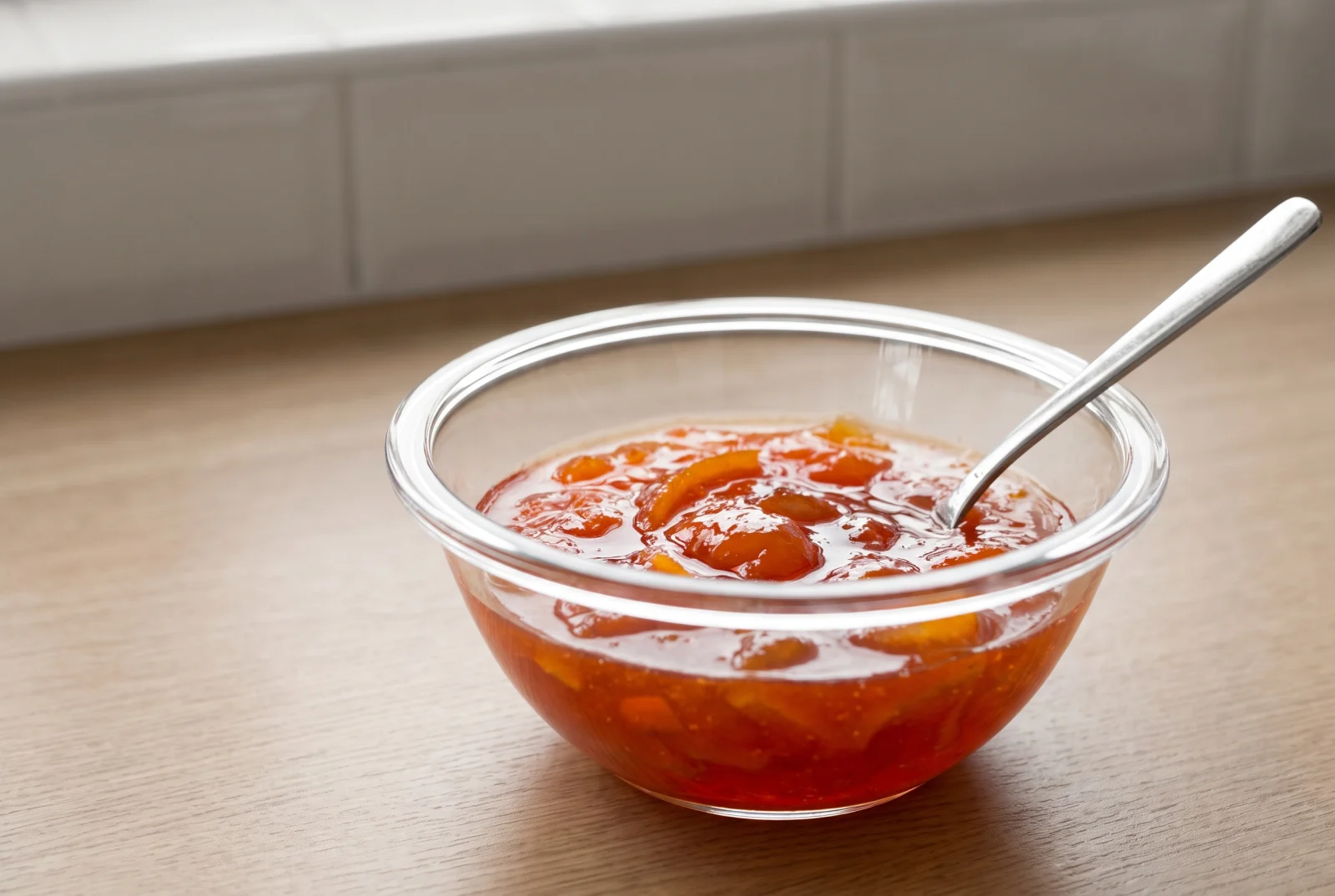
Japanese quince (Chaenomeles) is the hard, lemon-tart fruit of an ornamental shrub grown for its red flowers, which bloom in early spring. The fruit turns yellow in fall. It is too hard and tart to eat raw, but cooking brings out a rich aroma reminiscent of quince and pineapple, and it is naturally high in pectin. Simmer the fruit with its peel and core, then let the liquid drain through cheesecloth on its own. It sets into an amber jelly without added pectin or lemon.

Step by Step

How to make it?

1

Cut the fruit

20 min

Wash and dry the fruit. It is very hard, so use a sturdy knife to cut each one into quarters, then slice it thinly. Keep the peel and core, where most of the pectin is; do not crack the seeds.

2

Simmer the fruit

50 min

Put the slices in a pot with 1.5 liters of water and bring to a boil. Simmer over low heat with the lid slightly ajar for 45 minutes. When the slices are soft enough to fall apart, mash them in the pot with the back of a spoon.

3

Hang to strain

10 min

Pour the mixture into a strainer lined with damp, wrung-out double-layer cheesecloth, or into a cheesecloth bag hung over a wide bowl. Let it drain on its own. Do not squeeze the cloth; squeezed juice will make the jelly cloudy. Measure the juice in the morning; you should have about 900 ml.

4

Boil the juice with sugar

25 min

Bring the juice to a boil in a wide pot. Use 780 g of sugar for every 1 liter of juice, or 700 g for 900 ml. Stir until the sugar dissolves, skim off the foam, and boil over high heat. Because the juice is high in pectin, it usually reaches 104–105°C / about 220°F in 10–15 minutes. Drop a little jelly onto a cold plate; remove the pot from the heat when the jelly wrinkles as you push it.

5

Fill and process the jars

15 min

While the jelly cooks, wash the jars and lids with hot, soapy water, then boil them for 10 minutes. Keep them in hot water until ready to fill. Ladle the hot jelly into the hot jars, leaving 0.5–1 cm of headspace. Wipe the rims with a clean, damp cloth and seal. For jars intended for pantry storage, process them with the lids on in a boiling-water bath for 10 minutes.

Reminder

Let the fruit juice drain through the cheesecloth on its own for 8–12 hours; this resting time is not included in the recipe time. Do not squeeze the cloth. Japanese quince is already very tart, so the jelly needs no lemon.

Nutritional Values · 1 serving

Values are estimates
53 kcalCalories
0 gProtein
13.2 gCarbohydrate
0 gFat
0.1 gFiber
13 gSugar
0 mgSodium
0 gSaturated Fat
Protein 0% Carbohydrate 100% Fat 0%
Share
Reviews

Comments (1)

5.0 2 reviews 100% recommend it 2 rated without leaving a comment
5 2
4 0
3 0
2 0
1 0
N
Nadir Cebeci 4 weeks ago

Süzmeye asarken torbayı sıkmayın, sıktım ve jöle bulanık oldu. Bu meyvenin pektini bol, ayrıca pektin gerekmedi. Meyveyi çekirdekleriyle birlikte haşlamak gerekiyor, pektinin çoğu çekirdek ve kabukta; ayıklayıp attığım ilk partide jöle hiç donmadı.

İ
İrem Recipe Owner 3 weeks ago

Torbayı sıkmamak doğru, bulanıklık oradan geliyor. Bu meyvenin pektini gerçekten yüksek, çekirdek ve kabukla haşlamak da o pektini serbest bırakıyor.

Similar Recipes

You'll like these too

Recipes tried by those who liked this one, fitting the same table.

Send Feedback