Ahmet ÖrgeCuisinier de Ligne
09 August 2026 Last updated: 09 August 2026

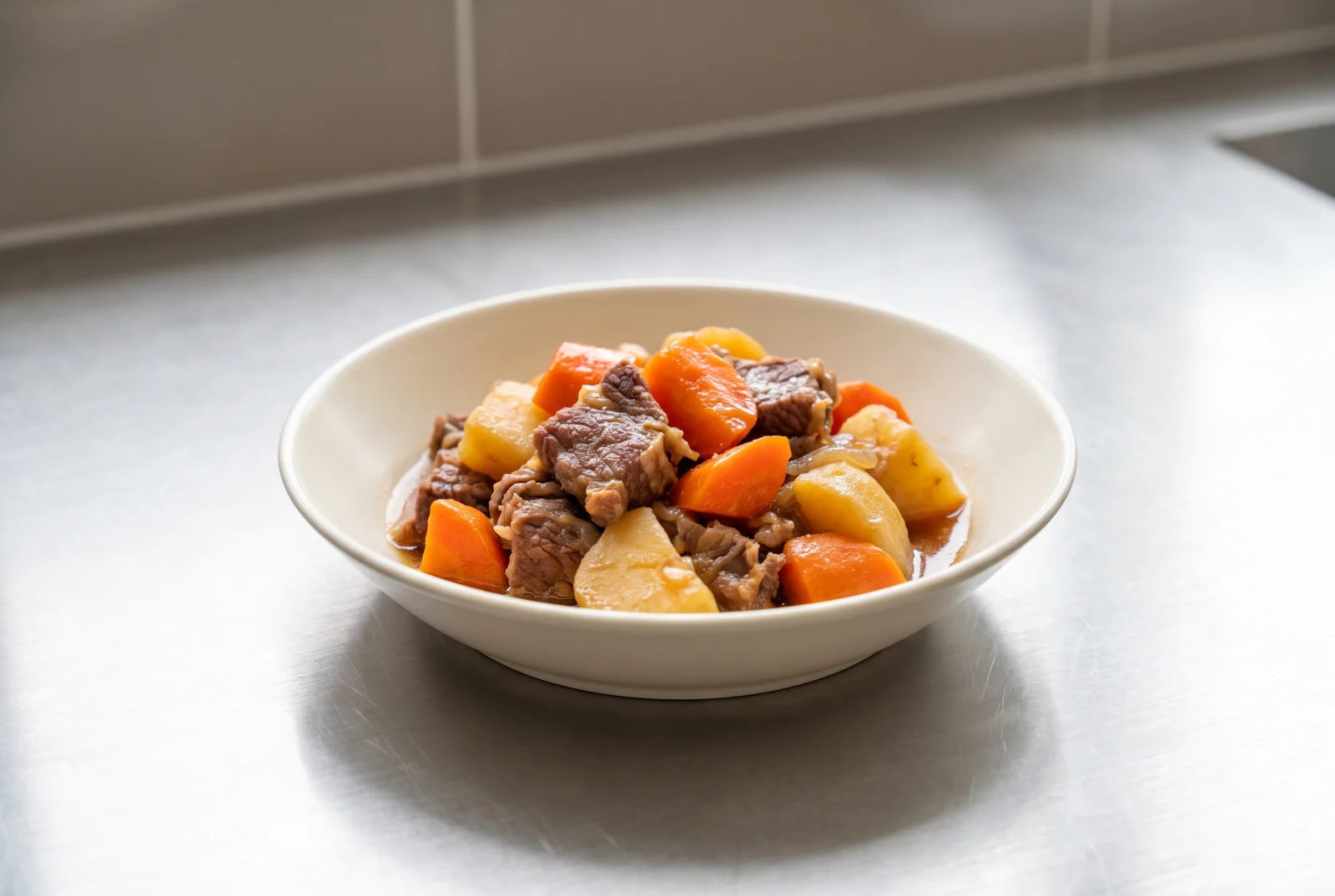
Nikujaga takes its name from its ingredients: niku means meat, and jaga means potato. It is a staple of Japanese home cooking, and its sauce is built from four liquids: dashi, soy sauce, sugar, and a little apple juice. The beef is sliced paper-thin so it cooks in time with the potatoes; thicker pieces would not tenderize before the potatoes fell apart. A drop lid (otoshibuta) distributes the small amount of liquid evenly over the ingredients.

Step by Step

How to make it?

1

Cut the vegetables into large pieces

12 min

Peel the potatoes, cut them into 4 cm pieces, and lightly trim the sharp corners with a knife so they do not crumble during cooking. Cut the onion into eighths and roll-cut the carrot into irregular pieces. Shell the peas and set them aside.

2

Sear the beef

5 min

Heat the oil in a wide pot. Spread the beef slices in a single layer and turn them once the top begins to change color. The goal is to sear the surface and release its aroma, not cook the beef through. Transfer the slices to a bowl.

3

Sauté the onion

4 min

Add the onion slices to the same pot and scrape up the browned bits from the bottom as you cook until the onion turns translucent. Stop when the edges soften and just begin to break; do not brown them. The browned bits at the bottom will give the dish body.

4

Add the liquid and skim the foam

8 min

Add the potatoes and carrots to the pot, then pour in the dashi, granulated sugar, and apple juice. When the liquid begins to boil, skim off the gray foam from the surface; otherwise, the sauce may turn cloudy and leave a gritty mouthfeel. Do not add the soy sauce yet.

5

Cook with a drop lid

22 min

Add the soy sauce now; adding salt at the start can harden the outside of the potatoes and prevent them from absorbing flavor. Place a small plate or a sheet of parchment paper with a hole in the center directly over the food. It should be smaller than the pot opening; this works like a Japanese drop lid (otoshibuta). Simmer over low heat, shaking the pot occasionally to redistribute the liquid, until a skewer meets only slight resistance when inserted into a potato.

6

Return the beef and reduce the sauce

5 min

Return the reserved beef slices and peas to the pot. Raise the heat slightly and cook until the sauce has reduced to one-third of its original amount. When you tilt the pot, the sauce should flow slowly rather than like water. Remove from the heat, cover, and let it rest until serving.

Reminder

After removing the pot from the heat, let it rest covered for 20 minutes so the potatoes can absorb the sauce as they cool. This is why nikujaga is said to taste even better the next day. Allergens: Contains soy; soy sauce may contain wheat, and dashi may contain fish depending on the product. Check product labels.

Nutritional Values · 1 serving

Values are estimates
442 kcalCalories
26 gProtein
49 gCarbohydrate
16 gFat
7 gFiber
12 gSugar
570 mgSodium
5 gSaturated Fat
Protein 23% Carbohydrate 44% Fat 32%
Share
Reviews

Comments (1)

0.0 0 reviews 0% recommend it
5 0
4 0
3 0
2 0
1 0
S
Sinan Kayacan 4 weeks ago

İç kapak yerine kesip deldiğim pişirme kâğıdı kullandım, patatesler dağılmadan pişti. Eti mühürledikten sonra aynı tavada soğanı kavurmak dipteki kahverengi tadı sıvıya taşıyor, ayrı tavada yapanlar bunu kaybediyor.

Similar Recipes

You'll like these too

Recipes tried by those who liked this one, fitting the same table.

Send Feedback