Baran ErbulakCommis
11 September 2026 Last updated: 11 September 2026

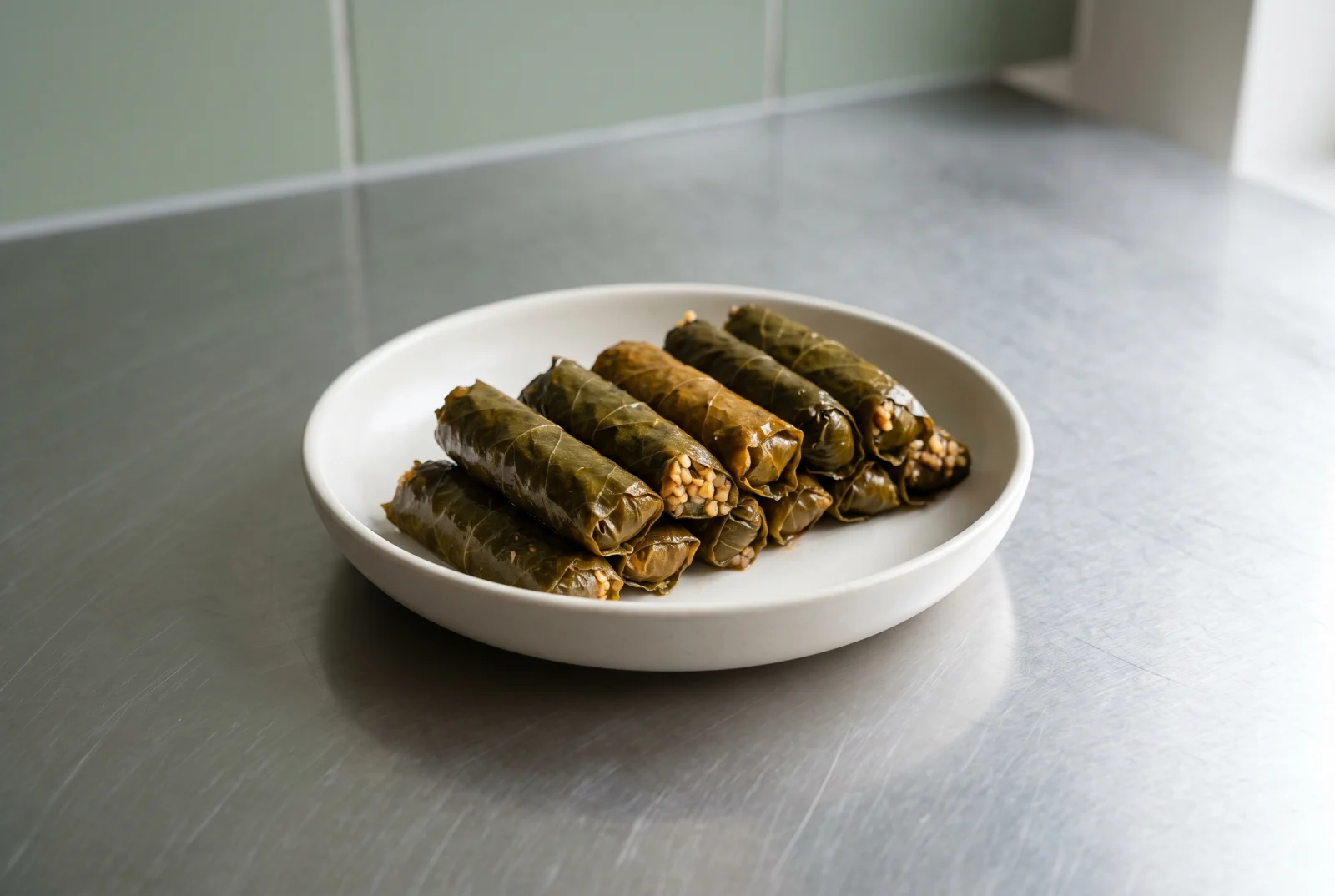
Young plum leaves sprout in spring and can be used for rolls before grapevines produce their leaves. Plum leaves are small and slightly astringent, so the rolls are tiny; tomato, rather than tomato paste, sweetens the filling and balances their astringency. Cook them gently in olive oil and serve warm.

Step by Step

How to make it?

1

Collect and sort the leaves

12 min

Pick only young, light-colored, glossy leaves from the shoot tips; older, darker leaves become tough and will not soften with blanching. Cut off the stems at the base and rinse under running water. Set aside any torn or spotted leaves to line the bottom of the pot.

2

Blanch briefly

8 min

Bring water to a boil in a wide pot and add a pinch of salt. Lower the leaves into the water by the handful and lift them out with a skimmer as soon as they turn dark green. Fold one leaf in half: if it bends without crackling, drain the rest; if it still breaks, leave them in the water for a few more seconds.

3

Prepare the filling

9 min

Finely chop the onion and rub it with half the salt. Grate the tomatoes. Mix the fine bulgur, onion, tomato, half the olive oil, dried mint, Turkish red pepper flakes, black pepper, and remaining salt. Let stand for 10 minutes; once the bulgur absorbs the tomato juices, the filling will be ready to wrap.

4

Roll

22 min

Because the leaves are small, use no more than one 4 ml measure of filling per leaf. Place the filling at the base of each leaf with the veined side facing up, fold in the sides, and roll loosely to about the thickness of your little finger. Arrange the rolls in rows over the torn leaves you set aside.

5

Cook

26 min

Mix the remaining olive oil, water, and lemon juice and pour over the rolls; the liquid should come about a finger’s width above them. Cover with an inverted plate and bring to a boil, then reduce the heat and cook for 40 minutes. Cut open one roll to check: the bulgur should be plump all the way to the center. Remove from the heat, rest covered, and serve warm.

Reminder

The thickness of the leaves varies with the age of the shoots. Do not judge blanching by time: stop when a leaf folds in half without crackling. Allergen: Contains wheat (gluten). Check packaged-product labels for other allergens.

Nutritional Values · 1 serving

Values are estimates
354 kcalCalories
7 gProtein
38.1 gCarbohydrate
19.3 gFat
7.9 gFiber
3.6 gSugar
610 mgSodium
2.7 gSaturated Fat
Protein 8% Carbohydrate 43% Fat 49%
Share
Reviews

Comments (3)

3.7 6 reviews 67% recommend it 6 rated without leaving a comment
5 1
4 3
3 1
2 1
1 0
R
Reyhan Alkan 2 weeks ago

Tokat'ta yaprakları tuzlu suda kavanozlayıp kışa saklıyorlar, ben de bu yıl denedim.

B
Baran Recipe Owner 2 weeks ago

Salamura yaprak kışın işe yarıyor, yalnız kullanmadan önce bir saat tatlı suda beklettiğinizden emin olun; tuzunu atmazsanız harcın tuzuyla çakışıyor.

A
Alper Sedefli 2 weeks ago

Kısa haşlama yeterli, uzun tutunca yaprak şeffaflaşıp elde dağıldı. Kaynar suya daldırıp otuz saniye içinde aldım ve hemen soğuk suya attım; soğuk su hem pişmeyi durduruyor hem yaprağı tutulabilir hâle getiriyor.

D
Doruk Günaydın 3 weeks ago

Erik yaprağını genç toplamak lazım, olgun yapraklar sert ve sarılırken kırılıyor. Dalın ucundan üç dört yaprak geriye kadar olanlar iyi; daha aşağıdakiler kalınlaşmış oluyor ve haşlarken bile yumuşamıyor.

Similar Recipes

You'll like these too

Recipes tried by those who liked this one, fitting the same table.

Send Feedback