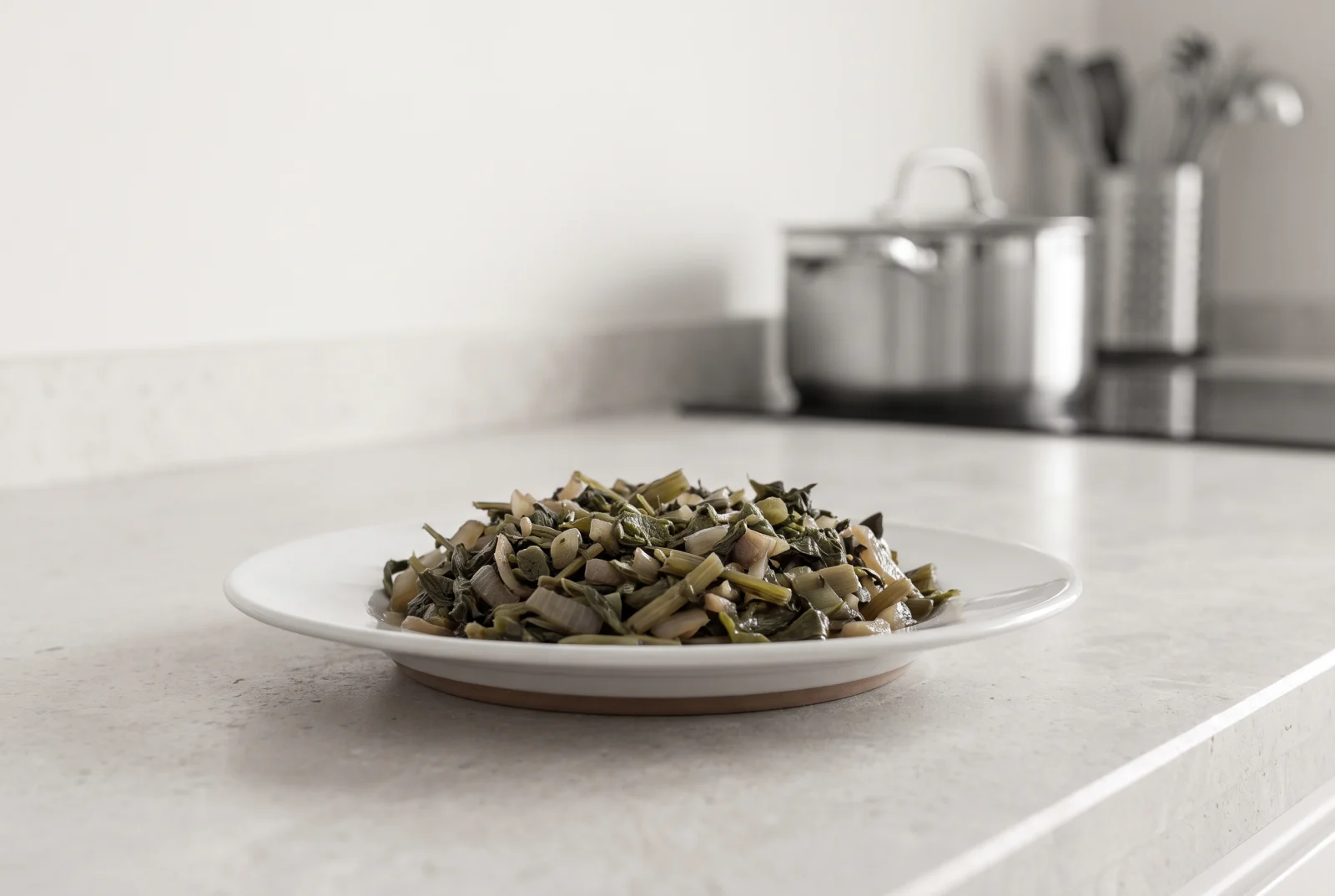
Trim and wash the greens
15 minTrim the root ends and tough, flowering stems, keeping only the leaves and tender stems. Wash three times in plenty of water, until no soil remains at the bottom.
Shepherd’s purse gets its name from its seed pods: the small, heart-shaped pods arranged along the stem resemble a shepherd’s bag. In the Aegean region, the young leaves that spread close to the ground are gathered in winter and spring, briefly blanched, then sautéed with onion in olive oil. They have a mild, mustard-like bite and are finished with lemon and Turkish red pepper flakes.
Trim the root ends and tough, flowering stems, keeping only the leaves and tender stems. Wash three times in plenty of water, until no soil remains at the bottom.
Drop the leaves into boiling water and blanch for 2–3 minutes. Drain, rinse with cold water, squeeze dry, and chop coarsely.
Sauté the half-moon-sliced onion in olive oil over medium heat for 7–8 minutes, until the edges begin to color.
Stir the crushed garlic for 30 seconds, then add the greens, salt, and Turkish red pepper flakes. Sauté, stirring, for 4–5 minutes, until the greens are heated through and glossy with oil.
Remove from the heat, squeeze lemon over the top, and serve hot or warm.
Gather only young leaves from plants with visible heart-shaped seed pods, identifying them as shepherd’s purse (Capsella bursa-pastoris). It can be confused with other ground-level rosettes, especially poisonous ragwort (Senecio). Do not forage plants you cannot identify, and never gather them by roadsides or from treated fields.
No one has commented on this recipe yet. Write the first comment.
Recipes tried by those who liked this one, fitting the same table.
Suggestions, complaints or questions — we read them all.
Your message has been saved. Our team will read it; if you left an email address, we will reply there when needed.