Rinse the rice
8 minRinse the rice in a wide bowl, changing the water five or six times until it no longer looks cloudy. If the starch is not removed, the grains will stick together as they cook. Then leave the rice to soak in salted water.
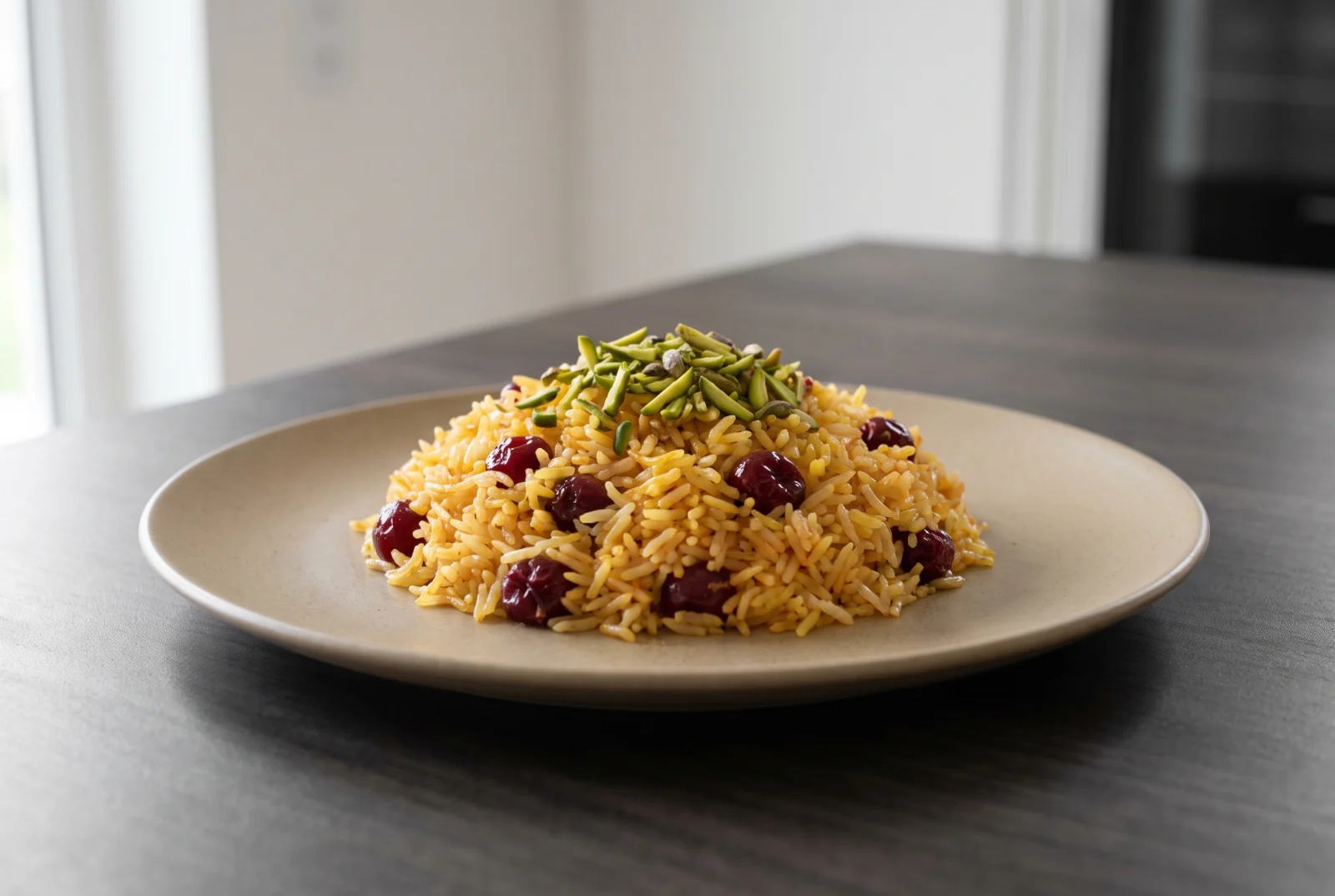
One of the most striking Persian rice dishes: sour cherries are simmered in their own syrup and strained, while the rice is parboiled, layered in a pot, and steamed until a crisp bottom crust called tahdig forms. Do not pour the cherry syrup directly over the rice; it will wet the grains and make them stick together. Properly cooked, each grain stays separate, and the cherry color tints only part of the rice.
Rinse the rice in a wide bowl, changing the water five or six times until it no longer looks cloudy. If the starch is not removed, the grains will stick together as they cook. Then leave the rice to soak in salted water.
Put the sour cherries, sugar, and lemon juice in a pot. Cook over low heat until the cherries release their juice and it thickens into syrup. Strain, reserving the cherries and syrup in separate bowls; they are added to the rice separately, not together.
Bring 3 liters of water to a boil and salt it, then add the drained rice. After 5–6 minutes, crush a grain between two fingers: it is ready when the outside is soft but the center is still raw. Drain immediately and rinse with lukewarm water; if fully cooked now, it will turn mushy while steaming.
Add half the butter and one spoonful of the steeped saffron water to a nonstick pot. Spread two ladlefuls of rice over the bottom and press with the back of a spoon; this layer will become the tahdig, and the more firmly you press it, the more intact it will be.
Layer the remaining rice and drained cherries in the pot, alternating them and building a pyramid; scatter cherries over each layer but do not stir. Do not pour the cherry syrup over the rice; keep it separate for serving. Use the handle of a wooden spoon to make five holes in the top so steam can escape.
Melt the remaining butter and drizzle it over the rice. Wrap the pot lid in a clean kitchen towel and cover the pot; the towel catches condensation and prevents it from dripping. Cook over medium heat for the first 8 minutes, then over the lowest heat. A faint crackling sound from the bottom of the pot means the tahdig is forming.
In a separate bowl, mix one ladleful of rice with the remaining saffron water to tint it orange. Transfer the rice to a serving platter, then top with the saffron rice and chopped pistachios. Invert the pot over a plate to release the tahdig and serve it separately. Serve the cherry syrup in a sauce dish.
After rinsing the basmati rice, soak it in salted water for at least 1 hour, preferably 3; rice that is not soaked will not lengthen and may break during cooking. Also grind the saffron in a mortar and steep it in 3 spoonfuls of hot water for 15 minutes.
Tahdig için tencerenin kalın tabanlı ve yapışmaz olması işi kolaylaştırıyor, çelik tencerede tabanı yaktım. Safranlı tepeyi en sona saklayın, pilavın tamamına karıştırınca o beyaz sarı vişne karşıtlığı kayboluyor.
Pirinci yarı haşlama süresini kaçırdım, demlemede taneler dağıldı.
Tane dişe gelmeli, tam yumuşadıysa geç kalmışsınız demektir. Suyu kaynayınca beş altı dakika yeterli, sonra hemen süzün.
Vişne şurubunu fazla koyunca pilav pembeleşip ıslandı, ölçülü olmak gerekiyor.
Recipes tried by those who liked this one, fitting the same table.
Suggestions, complaints or questions — we read them all.
Your message has been saved. Our team will read it; if you left an email address, we will reply there when needed.