Grate off the outer zest
10 minWash and dry the citron. Use the fine side of a grater to remove the thin yellow-green zest from the entire fruit; this layer is oily and bitter. Stop when the white pith appears, and do not grate the pith.
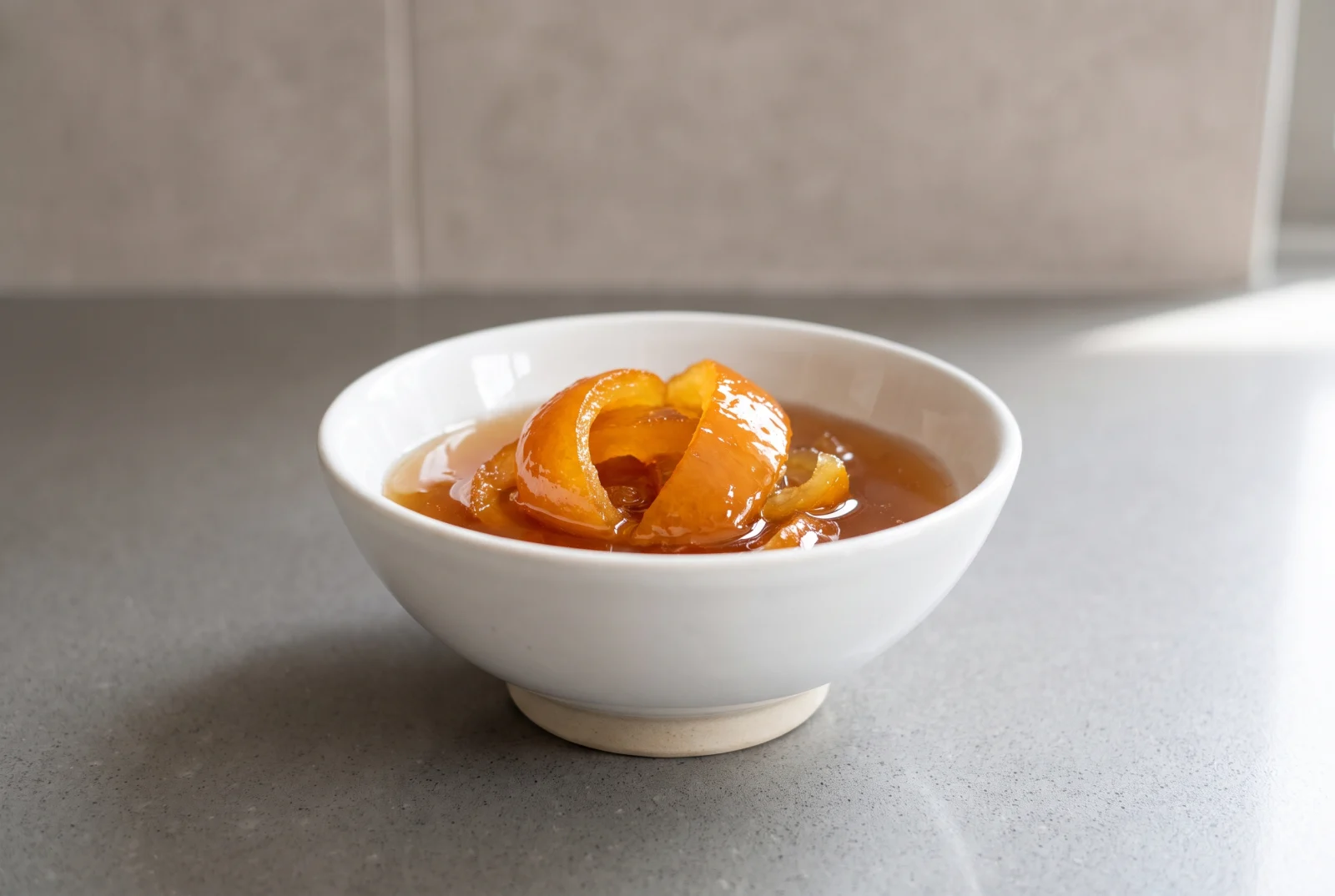
Citron resembles a lemon but is much larger and has a bumpy rind. Its edible part here is not the sour pulp but the thick, pithy white peel. In Antalya and Hatay, the zest is grated away, and the remaining pith is boiled in several changes of water to remove its bitterness, then simmered in syrup until translucent. The result is a spoonable preserve with tender pieces of peel in a rich syrup.
Wash and dry the citron. Use the fine side of a grater to remove the thin yellow-green zest from the entire fruit; this layer is oily and bitter. Stop when the white pith appears, and do not grate the pith.
Cut the fruit into quarters lengthwise. Use a spoon to scrape out and discard the sour pulp and seeds; only the white pith goes into the preserves. Cut the pith into 2 cm cubes and weigh it; you should have about 600 g. If you have less, reduce the sugar and water proportionally.
Put the cubes in a pot and cover them with water by 3 cm. Bring to a boil and cook for 10 minutes. Drain and rinse with cold water, then repeat twice more with fresh water. After the third blanch, a knife should slide into the pith without resistance, and only a faint bitterness should remain.
In another pot, bring the sugar and 300 ml water to a boil. Once the sugar dissolves, add the drained pith. Cook over low heat for 40 minutes, occasionally shaking the pot instead of stirring with a spoon; stirring can break up the pieces. When the pith is translucent, add the lemon juice. Remove from the heat when the syrup reaches 104–105°C / about 220°F, or when a drop on a cold plate stays in place when nudged.
While the preserves cook, wash the jars and lids in hot, soapy water, then boil them for 10 minutes. Keep them in hot water until ready to fill. Pour the preserves into the hot jars while still hot, leaving 0.5–1 cm of headspace. Wipe the rims with a clean, damp cloth and close the jars. For jars intended for pantry storage, process them with the lids on in a boiling-water bath for 10 minutes.
After the final blanch, taste a small piece of peel. If it is still noticeably bitter, blanch it once more; bitterness will not come out after it enters the syrup. It takes several hours for the jars to cool and their lids to seal inward; this resting time is not included in the recipe time.
No one has commented on this recipe yet. Write the first comment.
Recipes tried by those who liked this one, fitting the same table.
Suggestions, complaints or questions — we read them all.
Your message has been saved. Our team will read it; if you left an email address, we will reply there when needed.