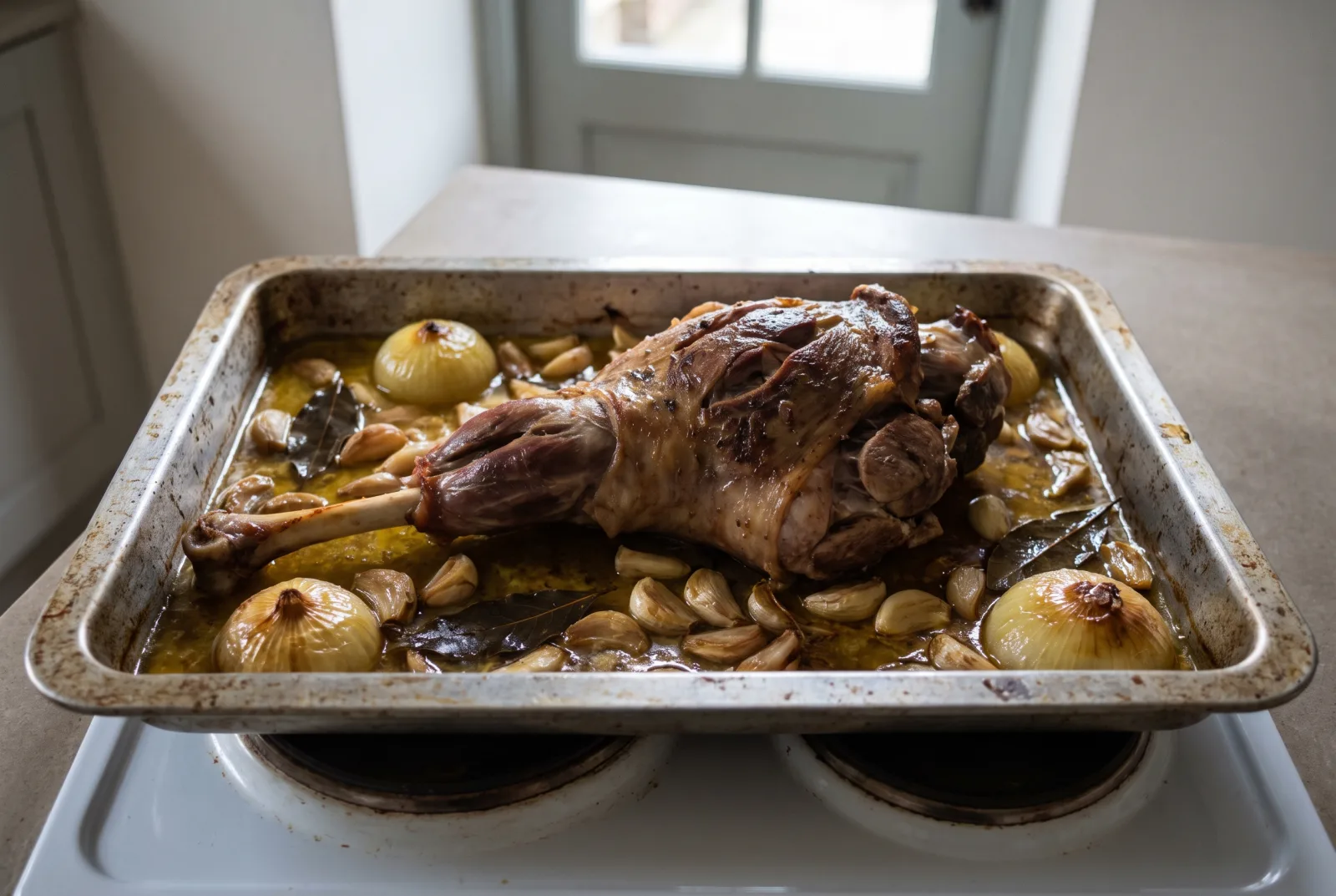
Season and rest the lamb
15 minRub the room-temperature lamb pieces all over with salt and black pepper, then coat them with a thin layer of softened butter. Let them rest for 15 minutes so the seasoning can absorb.
This traditional lamb roast is cooked for hours at a low temperature until it falls apart with a fork. Made with just a few ingredients, the lamb softens in its own fat and juices; this Anatolian classic is a favorite for holiday meals and large gatherings.
Rub the room-temperature lamb pieces all over with salt and black pepper, then coat them with a thin layer of softened butter. Let them rest for 15 minutes so the seasoning can absorb.
Spread the coarsely chopped onions, crushed garlic and bay leaf over the bottom of a deep roasting pan. Arrange the meat in a single layer on top and pour a 200 ml measure of hot water into a corner of the pan.
Cover the pan tightly with two layers of aluminum foil. Roast in an oven preheated to 150°C / 300°F for about 3.5 hours, until the meat falls apart easily with a fork. The foil traps the steam and tenderizes the lamb in its own juices.
Remove the foil and raise the oven temperature to 200°C / 390°F. Roast uncovered for another 20–25 minutes, until the top is golden and lightly browned. Spoon the pan juices over the meat from time to time.
Rest the lamb for 10 minutes after taking it out of the oven so it can reabsorb its juices. Serve hot with the pan sauce and rice or roasted vegetables.
Important: Take the lamb out of the refrigerator at least half an hour before cooking so it can come to room temperature; cold meat may dry out on the outside before the heat reaches the center. Caution: Opening the oven door frequently lowers the temperature and extends the cooking time, so keep it closed as much as possible. Refrigerate leftover lamb in a covered container for up to 3 days. Sprinkle a few spoonfuls of water over it and cover while reheating to keep it from drying out. Nut-free. Allergen: According to the ingredient list, this contains milk and dairy products. Check packaged product labels for other allergens.
No one has commented on this recipe yet. Write the first comment.
Recipes tried by those who liked this one, fitting the same table.
Suggestions, complaints or questions — we read them all.
Your message has been saved. Our team will read it; if you left an email address, we will reply there when needed.