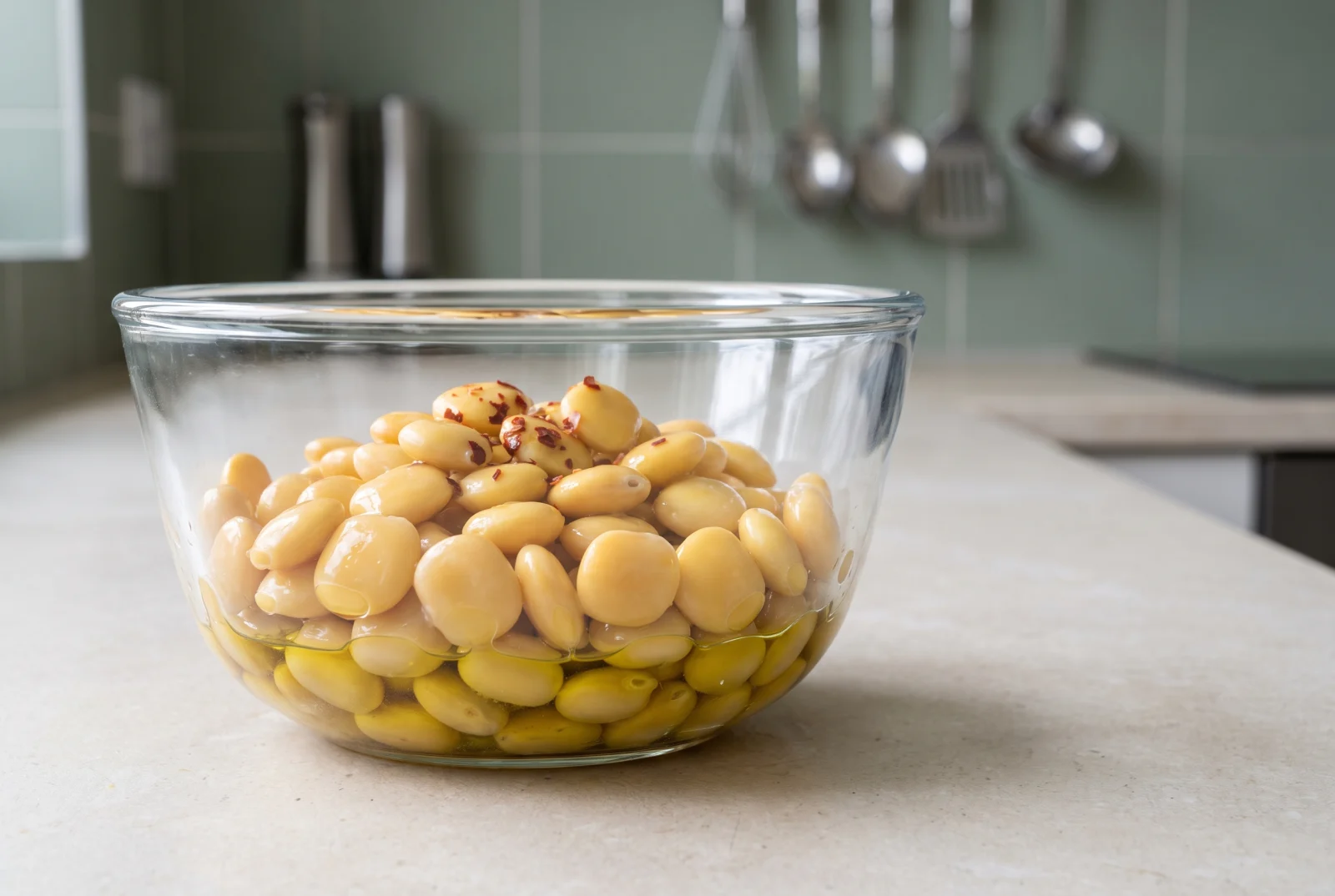
Boil the lupin beans
45 minDrain the lupin beans that soaked overnight, cover them with fresh water, and boil for 40 minutes, until a bean can be crushed between your fingers. Discard the cooking water; the first bitterness goes with it.
Raw lupin beans are not safe to eat. Their bitter alkaloids must be drawn out by changing the water over several days. This is essential, and taste is the only way to tell when the process is complete: if any bitterness remains, keep soaking and changing the water. Store the debittered beans in brine and serve them with lemon as a snack along the Aegean coast.
Drain the lupin beans that soaked overnight, cover them with fresh water, and boil for 40 minutes, until a bean can be crushed between your fingers. Discard the cooking water; the first bitterness goes with it.
Transfer the drained beans to a wide container, cover them generously with cold water, and place them somewhere cool. From this point, let them soak and change all the water twice a day.
Taste one bean each day. Even the slightest bitterness at the back of your tongue means the process is not complete. Once all bitterness is gone, rinse the beans one final time.
Dissolve the rock salt in 1 liter of boiled, cooled water and refrigerate the lupin beans in this brine. To serve, drain them, squeeze lemon juice over the top, and drizzle with olive oil and red pepper flakes.
Debittering takes 5–7 days: keep the beans in cold water and change all the water at least twice a day. Taste a bean; if even the slightest bitterness remains, the lupin beans are NOT READY. Keep soaking them. Lupin can cause a cross-reaction in people with peanut allergies; anyone trying it for the first time should start with a small amount.
No one has commented on this recipe yet. Write the first comment.
Recipes tried by those who liked this one, fitting the same table.
Suggestions, complaints or questions — we read them all.
Your message has been saved. Our team will read it; if you left an email address, we will reply there when needed.