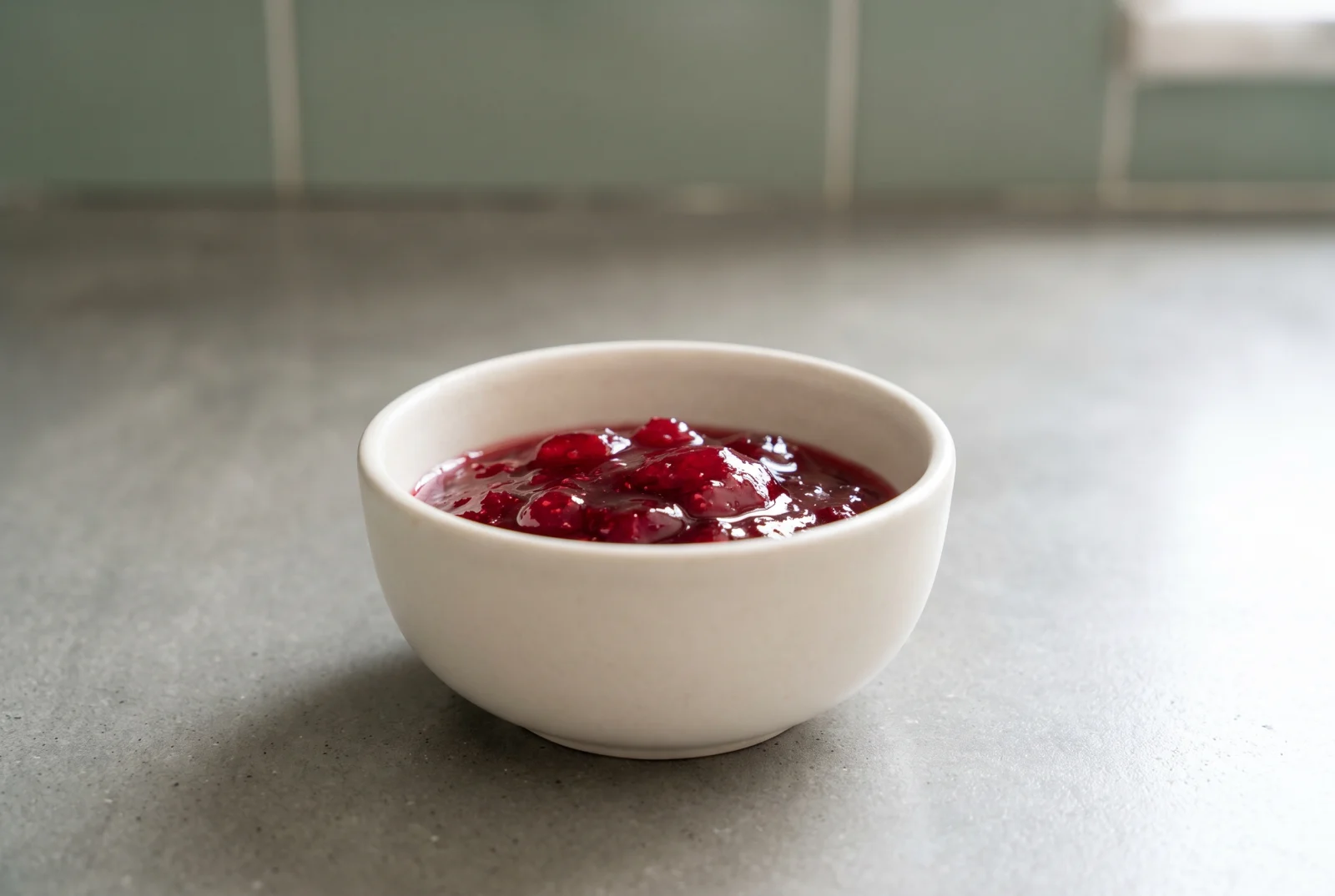
Sort and wash the berries
20 minPull the gilaburu berries one by one from their clusters; do not include the stems or leaves. Discard any shriveled or darkened berries, then rinse the rest in plenty of cold water and drain.
Jam
Gilaburu is a wild fruit collected in Kayseri in late October, after the first cold spell. It is bright red with large, flat seeds and is best known locally for its juice and sweet drink. The flavor is tart and slightly bitter; cooking softens but does not remove that bitterness, which defines the preserve. The fruit contains its own pectin and acid, so no lemon or added pectin is needed. Strain out the seeds after boiling.
Pull the gilaburu berries one by one from their clusters; do not include the stems or leaves. Discard any shriveled or darkened berries, then rinse the rest in plenty of cold water and drain.
Put the berries and 500 ml of water in a pot and bring to a boil. Cook for 15 minutes with the lid slightly ajar. When the skins split and the berries begin to break down, gently mash them against the side of the pot with the back of a spoon.
Transfer the hot mixture to a medium-mesh strainer and press it with a spoon. The flat, hard seeds and skins should remain in the strainer while a deep red puree runs through. You should have about 800 g of puree.
Put the puree and sugar in a wide pot and stir over low heat until the sugar dissolves. Increase the heat and bring to a boil, stirring constantly; gilaburu is rich in pectin, so the preserve thickens in 10–15 minutes. Remove it from the heat when it reaches 104–105°C / about 220°F or wrinkles when pushed on a cold plate. If overcooked, it will set too firmly in the jars.
While the preserve cooks, wash the jars and lids in hot, soapy water, then boil them in water for 10 minutes. Keep them in hot water until ready to fill. Ladle the hot preserve into the hot jars, leaving 0.5–1 cm of headspace. Wipe the rims with a clean, damp cloth and close the jars. For pantry storage, process the closed jars in a boiling-water bath for 10 minutes.
Do not eat handfuls of raw gilaburu berries, as they may upset the stomach; the fruit is cooked by boiling in this preserve. Gilaburu picked after the first cold spell is less bitter. The jars take several hours to cool, and that time is not included in the recipe.
No one has commented on this recipe yet. Write the first comment.
Recipes tried by those who liked this one, fitting the same table.
Suggestions, complaints or questions — we read them all.
Your message has been saved. Our team will read it; if you left an email address, we will reply there when needed.